Showing posts with label Noise. Show all posts

Saturday, January 22, 2022

Economic Evaluation of the Indoor Environmental Quality of Buildings: The Noise Pollution Effects on Housing Prices in the City of Bari (Italy)

Abstract
Among environmental factors, noise represents one of the most relevant determinants on human health and on the urban quality level and, consequently, on real estate values. Thus, the noise pollution issue plays a significant role in public urban policies aimed at increasing the acoustic comfort level and creating more sustainable and comfortable cities. The real estate market  is highly sensitive to noise factor and the residential prices can be strongly influenced by a high acoustic pollution rate. The present research aims to analyze the functional relationships between noise pollution and selling prices in four municipal areas of the city of Bari (Southern Italy). For each area, a study sample constituted by two hundred residential properties sold in 2017–2019 was detected for the identification of the main influential factors on prices and the investigation of the contribution of noise on them. The implementation of an econometric technique was used to obtain four different models (one for each municipal area of the city of Bari) able to explain the specific impact of noise pollution level on selling prices. From the comparison of the results obtained for each area, the outputs confirm the expected phenomena in terms of a decrease of noise component influence on residential prices from the central area to the peripheral. For the suburban area of the city of Bari, the model obtained does not include the noise pollution factor, showing a lower (scarce) importance of the environmental factor among the buyer and seller bargaining phases.

..The sound level (Ld) is expressed in decibels dB(A), measured on day, evening and night intervals, in the street where the residential unit is located. The data is derived from  the Strategic Noise Map of the Bari agglomeration, published in June 2017 by the Scientific Directorate of the Regional Agency for Environmental Prevention and Protection of the Puglia Region (ARPA Puglia) with (i) Rating 1: <40 dB(A); (ii) Rating 2: >40 dB(A) and <50 dB(A); (iii) Rating 3: >50 dB(A) and <55 dB(A); (iv) Rating 4: >55 dB(A) and <60 dB(A); (v) Rating 5: >60 dB(A) and <65 dB(A); (vi) Rating 6: >65 dB(A) and <70 dB(A); (vii) Rating 7: >70 dB(A) and <75 dB(A).
The average percentage decrease in the selling price corresponding to a variation from one Ld level to the next one is almost constant for the OMI central area (-3.31%) and for the OMI semi-central area (-3.46%) of the city of Bari. Conversely, for the peripheral area, the average percentage decrease in the housing price corresponding to a passage from a Ld level to the next one is lower and equal to -2.47%. This confirms the lower influence given by the factor related to the noise pollution on selling prices in the municipal OMI area in which the pollution is minor, due to less levels of road traffic and industrial traffic and less of a preference for recreational activities.

For the suburban municipal area, the model does not include the variable Ld among the influencing factors on selling prices. Thus, it is evident that a lower noise pollution level (average sound level Ld for the central area is equal to 64.8 dB(A), whereas the sound level Ld for the suburban area is equal to 57.02 dB(A)) corresponds to a less significant effect of the acoustic factor in the selling price formation.

by Pierluigi Morano 1 , Francesco Tajani 2 , Felicia Di Liddo 1,* and Michele Darò 3
Buildings  Volume 11, 213; Published: 19 May 2021
open access 
1 Department of Civil, Environmental, Land, Building Engineering and Chemistry (DICATECh),
Polytechnic University of Bari, Via Orabona 4, 70125 Bari, Italy; pierluigi.morano@poliba.it
2 Department of Architecture and Design, Sapienza University of Rome, Via Flaminia 359, 00196 Rome, Italy; francesco.tajani@uniroma1.it
3 Mi.Da—Sound Design, Via Porro 9, 10064 Pinerolo, Italy; michele.daro@awn.it

Thursday, January 19, 2017

The Local Economic and Welfare Consequences of Hydraulic Fracturing

Exploiting geological variation within shale deposits and timing in the initiation of hydraulic fracturing, this paper finds that allowing fracking leads to sharp increases in oil and gas recovery and improvements in a wide set of economic indicators. At the same time, estimated willingness-to-pay (WTP) for the decrease in local amenities (e.g., crime and noise) is roughly equal to -$1,000 to -$1,600 per household annually (-1.9% to -3.1% of mean household in-come). Overall, we estimate that WTP for allowing fracking equals about $1,300 to $1,900 per household annually (2.5% to 3.7%), although there is substantial heterogeneity across shale regions.
...
Conclusions
Using a new identification strategy based on geological variation in shale deposits within shale plays, we estimate the effects of fracking on local communities. There are four primary findings. First, counties with high fracking potential produce roughly an additional $400 million of oil and natural gas annually three years after the discovery of successful fracking techniques, relative to other counties in the same shale play. Second, these counties experience marked increases in economic activity with gains in total income (4.4 - 6.9 percent), employment (3.6 - 5.4 percent), and salaries (7.6 - 13.0 percent). Further, local governments see substantial increases in revenues (15.5 percent) that are larger than the average increases in expenditures (12.9 percent) though the increased expenditures seem largely aimed at supporting the new economic activity, with little effect, for example, on per pupil expenditures in public schools. Third, there is evidence of deterioration in the quality of life or total amenities, perhaps most notably marginally significant estimates of higher violent crime rates, despite a 20 percent increase in public safety expenditures....
Image result for Hydrofracking epa
by Alexander W. Bartik, Janet Currie, Michael Greenstone and Christoper R. Knittel
The University of Chicago Becker Friedman Institute for Research in Economics
Working Paper 2016-29; December 21, 2016
Keywords: Public Policy, Environment, fracking, economic impact, economic growth

Monday, January 9, 2017

The Amenity Cost of Road Noise

Abstract:      
This article reports [the results of] a complete two stage hedonic analysis for road noise. For the estimation of the hedonic price function I develop a spatial research design which simultaneously reduces the risk of omitted variable bias and the risk of measurement error in the noise measure. The preference parameters are identified following the approach developed in Bajari and Benkard (2005) by using a simple functional form for utility. Preferences are very heterogeneous and observable demographic characteristics explain 30 percent of the variation in taste for quiet. Results are used to discuss willingness to pay for noise reductions from two policy measures.
...
Several policy instruments are currently in use in the study area to limit the impact of road noise pollution. These span from technical solutions such as noise reducing asphalt or emission standards for tyres and vehicles, to traffic management, and subsidies for noise insulation. The current section discusses the welfare changes associated with two of these instruments: Regulation at the source in the shape of technical requirements (standards) for tyres, and traffic management with the closure of a busy road in central Copenhagen for private motor vehicles.

The friction between road and tyres is of increasing importance in generating road noise for vehicles travelling at more than 35 km per hour. The noise emission of tyres has been subject to regulation at the EU level since 2001 and was tightened in 2009 ((EC) No 661/2009) with effect from November 2011. The noise limits for tyres were reduced by 3-4 dB, but as the existing fleet was to a large extent already equipped with tyres below the limit for noise the expected effect on noise pollution has been assessed to be closer to 1-2 dB than 3-4 dB....

The median WTP for a 1 dB reduction of road noise is generally higher for families with children under the age of 18. Families without children and retiree households have very similar WTP somewhat lower than families with children. Students and singles have the lowest WTP....The total WTP for a 1 dB reduction across the households sums to DKK 3.7 million annually in 2000-prices for the 23,000 households in the 200 m sample with noise above 55 dB. Although families with children only account for 23 % of the sample, 37% of the benefits from the 1 dB reduction accrue to them. In contrast, singles make up 28 % of the sample and receive only 15 % of the benefits. If these WTP estimates are representative of the population of the whole EU area the total willingness to pay for the reduction in road noise is substantially larger. Overall, the benefits are likely to exceed the cost of the policy. Low noise tyres were already on the market prior to 2011 and were not generally more expensive than other tyres nor did they have worse properties.
...
A preferred strategy for noise reduction in the municipality of Copenhagen is to concentrate traffic on the network of major roads (Center for Miljø, 2013). In late 2008 an experiment was conducted in the district of Nørrebro in central Copenhagen. The municipality of Copenhagen decided to re-route traffic out of Nørrebrogade, a main route into the center of Copenhagen. Parts of the street were closed for car traffic temporarily for 3 months starting in October 2008. In the fall of 2009 it was decided to make the closure permanent with minor changes and to reduce the speed limit from 50 to 40 km/h. An evaluation of the effects of the project has shown a reduction in noise levels of up to 3 dB for homes located in the affected part of Nørrebrogade, where noise levels were estimated at 68 dB before the project....

Table 10 shows the distribution of WTP for a 3 dB reduction for five groups in the road border sample: The whole sample; households in the Nørrebro district; households with at least 68 dB road noise; households in Nørrebro with at least 68 dB road noise; and finally, households in a wealthier neighboring district, Østerbro, with at least 68 dB road noise. The WTP for a 3 dB reduction is very heterogeneous in the sample as a whole. In Nørrebro the heterogeneity is lower and WTP is generally lower with a median WTP half the size of the median WTP for the sample as a whole. For households in the whole research area exposed to at least 68 dB of road noise, the distribution of WTP for a 3 dB reduction shifts to the right and is less dispersed though still with a long right tail.
Noisy traffic
The WTP for households in Nørrebro with more than 68 dB of road noise is similar but more symmetric with an annual median WTP of 386 DKK not far from the mean of 417 DKK. In the wealthier district of Østerbro, the distribution of WTP shifts to the 25right with a median WTP of 467 DKK and a mean WTP of 606 DKK indicating that individual households there would gain more from a similar reduction....

Sunday, February 14, 2016

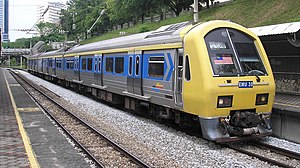
Negative Externalities of Rail Noise and Housing Values: Evidence from the Cessation of Railway Operations in Singapore

The governments of Malaysia and Singapore reached a landmark agreement in May 2010 to end the operations of nearly 80-year-old railway lines and stations in Singapore. In our study, the cessation of the railway services operated by Keretapi Tanah Malaya (KTM), a firm owned by the Malaysian government, with effect from July 1, 2011 is used in a quasi-experiment design to test the effects of the removal of train noise externalities on real estate values. Based on the nonlanded private housing transactions data from January 2005 to June 2013, we find that average prices for houses located within a 400-m boundary from the railway lines increased by 3.5% relative to prices for houses located outside the 400-m boundary after the cessation agreement has been announced. The removal of train noise externalities increases housing prices in the affected area by 13.7% on average in the post-cessation period of the KTM railway services. Realized economic benefits associated with the railway services cessation were estimated at S$0.36 billion based on houses sold in the post cessation period of the KTM railway services.
by Mi Diao, Yu Qin andTien Foo Sing; all  of  the Department of Real Estate, National University of Singapore, Singapore
American Real Estate and Urban Economics Association
Early View (Online Version of Record published before inclusion in an issue); Article first published online: November 4, 2015

Tuesday, March 25, 2014

Estimation of the global impacts of aviation-related noise using an income-based approach

Highlights
• We conduct a meta-analysis of 63 hedonic pricing noise studies and develop an income-based model to assess aviation noise impacts.
• We derive a relationship between city-level personal income and the willingness to pay for one decibel of noise reduction.
• The income-based model can be used to perform cost-benefit analysis of aviation noise policies on a global scale.
• The capitalized monetary impacts of aviation noise in 2005 are estimated to be $23.8 billion around 181 airports worldwide.

Abstract:
Current practices for assessing the monetary impacts of aviation noise typically use hedonic pricing methods that estimate noise-induced property value depreciation. However, this approach requires detailed knowledge of local housing markets, which is not readily available at a fine resolution for most airport regions around the world. This paper proposes a new noise monetization method based on city-level personal income, which is often more widely available. Underlying the approach is a meta-analysis of 63 hedonic pricing studies from eight countries, conducted between 1970 and 2010, which is used to derive a general relationship between average city-level personal income and the Willingness to Pay for noise abatement. Applying the new model to income, noise, and population data for 181 airports worldwide, the global capitalized monetary impacts of commercial aviation noise in 2005 are estimated to be $23.8 billion, with a Net Present Value of $36.5 billion between 2005 and 2035 when a 3.5% discount rate is applied. Comparison with previous results based on real estate data yields a difference of −34.2% worldwide and −9.8% for the 95 US airports in the analysis. The main advantages of the income-based model are fewer data limitations and the relative ease of implementation compared to the hedonic pricing methods, making it suitable for assessing the monetary impacts of aviation noise reduction policies on a global scale.
http://www.stopstanstedexpansion.com/photos_hatfield_heath_noise_meeting.html
by Qinxian He 1,  Christoph Wollersheim 2, Maryalice Locke 3 and Ian Waitz 1
Transport Policy via Elsevier Science Direct www.ScienceDirect.com
Available online 21 March 2014; In Press, Corrected Proof
http://dx.doi.org/10.1016/j.tranpol.2014.02.020
Keywords: Aircraft noise; Hedonic pricing; Willingness to pay; Aviation noise impacts; Cost-benefit analysis

Tuesday, February 25, 2014

Urban traffic externalities: quasi-experimental evidence from housing prices

Abstract:
This paper exploits a quasi-experiment to value the benefits of reducing urban traffic externalities. As a  source of exogenous variation we use the opening of a new bypass in The Hague, the Netherlands, that  reduced traffic on a number of local streets, leaving others unaffected. We calculate the effect of the change in traffic nuisance on housing prices and find that a reduction of 50% in traffic density induces a 1% increase in housing prices on average. Reductions in traffic nuisance are valued much more positively when the traffic  density is already high. We do not find evidence of anticipation effects up to 3 years before the change.  Furthermore, our results indicate that traffic nuisance effects are likely to be biased in cross-sectional studies.
...
The estimated elasticity of housing prices to traffic density is on average -0.02 for houses adjacent to the street; it is factor 2 to 4 smaller for houses located further away from the street. For houses located on very busy roads the effect of traffic density turns out to be much stronger: for streets with traffic flows above 15,000 cars per day an elasticity coefficient of -0.1 is estimated. Furthermore, we show that the total benefits of traffic nuisance reduction amount to some 8% of the reference costs of the bypass construction. 
...
The effect of the traffic density change reaches as far as 40 meters from the affected street. Column 2 of table 2 (baseline model) reports the elasticity of the prices of houses not adjacent to the street to be between -0.005 and -0.01.
 ...
One can compute the benefits of traffic nuisance reduction brought about by the bypass studied in this paper. Following a conservative approach that only accounts for the effects on houses adjacent to the affected streets, and takes the medium density elasticity of -0.02, the total local benefits for the houses in our dataset amount to 1.4 million euros in Leidschendam-Voorburg and 2.6 million euros in The Hague Mariahoeve.  Assuming that the houses in the dataset are a random sample from the housing stock, the total benefit of  reduced nuisance equals some 18 million euros.15 This is 3.5 million euros per kilometre bypass. To gain an insight into the relative importance of these benefits, we compare them with the reference construction costs of a two-lane bypass.16 Vos (2004) reports that a simple two-lane highway on ground level costs some 10 million euros per kilometre. Where tunnels and bridges are involved, as was the case with the bypass near The Hague, the cost easily quadruples to more than 40 million euros per kilometre (V&W, 2003). This simple calculation suggests that, for a bypass to be cost-efficient it must generate other benefits in addition to the reduction of urban traffic nuisance. For the bypass in our study an important benefit was the improved accessibility of The Hague.

by Ioulia Ossokina and Gerard Verweij
CPB Netherlands Bureau for Economic Policy Analysis
February 19, 2014
Keywords: Traffic externalities; Quasi-experiment; Housing market; Hedonic approach.

Tuesday, January 24, 2012

Valuing Aircraft Noise: Stated Choice Experiments Reflecting Inter-Temporal Noise Changes from Airport Relocation

http://www.springerlink.com/content/y64286g016v5k346/
Abstract: The relocation of Athens Airport provided a rare experimental context in which residents experienced significant changes in noise levels due to the introduction or removal of aircraft noise. This paper reports the results from surveys around both airport locations, using stated choice experiments to estimate values for aircraft noise. The respondents were offered actual inter-temporal noise change scenarios rather than hypothetical variations, which is uncommon in the literature, incorporating the presence or absence of an airport and other relevant transport attributes that also changed with the airport relocation. Whilst there is some variation in the valuation of the airport closure and opening, when these values are adjusted to reflect the actual change in decibels, there is remarkably little difference between the old and new airports. However, a significant variation in aircraft noise values is identified between different areas, with respect to education and to a lesser extent income. Our preferred estimate of the monthly household willingness to pay for terminating aircraft noise exposure is 13.12€ and for avoiding the onset of aircraft noise is 9.53€.

by Sotirios Thanos, Mark Wardman and Abigail L. Bristow
Environmental and Resource Economics via SpringerLink www.SpringerLink.com 
Volume 50, Number 4; December, 2011; pages 559-583
Keywords: Aircraft noise, Choice experiments, Environmental valuation, Stated choice, Stated preference, Willingness to pay, Willingness to accept compensation