Showing posts with label Upstate New York. Show all posts

Friday, February 26, 2016

New York Power Authority Begins Energy Savings Light Upgrades at State Museum to Cut Costs an Protect Environment


The New York Power Authority has begun a lighting upgrade project at the New York State Museum in Albany that is expected to save more than $160,000 in annual energy costs and reduce greenhouse gas emissions by 900 tons a year, the equivalent of taking 190 cars off the road.

The project, which is being financed and implemented by the New York Power Authority, is part of Governor Andrew M. Cuomo’s BuildSmart NY program, a comprehensive statewide initiative to increase energy efficiency in public buildings. BuildSmart NY is a key program underpinning the Governor’s Reforming the Energy Vision strategy to build a cleaner, more affordable and resilient energy system for all New Yorkers, and supports the state’s goal of reducing greenhouse gas emissions 40 percent by 2030.

“Energy-saving measures like the State Museum project are what will help define the success of REV,” said Richard Kauffman, chairman, Energy and Finance, Office of the Governor. “This project will lower the bottom-line costs of operating the museum and work toward the larger goal of achieving a clean energy economy in New York State.”

BuildSmart NY, which was launched in 2012, will save millions of taxpayer dollars while significantly reducing greenhouse gas emissions. State-owned buildings currently consume approximately five percent of the energy used by all buildings in New York.

NYPA is partnering with the New York State Education Department, which runs the museum. The Power Authority is providing more than $1.7 million in financing for the energy efficiency upgrades.
...
All of the existing, inefficient incandescent lighting throughout the museum’s exhibit areas will be replaced with high-performance LED track lighting. About 2,000 fixtures will be installed, along with a lighting-control system that will enable staff to illuminate specific areas and pathways to meet the particular needs of an exhibit.
...
The project is expected to complete this summer.

Museum Exterior


New York Power Authority www.NYPA.gov
Press Release dated February 18, 2016

Thursday, January 28, 2016

Valuation of expectations: A hedonic study of shale gas development and New York’s moratorium

Abstract:
This paper examines the local impacts of shale gas development (SGD). We use a hedonic framework and exploit a discrete change in expectations about SGD caused by the New York State moratorium on hydraulic fracturing. Our research design combines difference-in-differences and border discontinuity, as well as underlying shale geology, on properties in Pennsylvania and New York. Results suggest that New York properties that were most likely to experience both the financial benefits and environmental consequences of SGD dropped in value 23% as a result of the moratorium, which under certain assumptions indicates a large and positive net valuation of SGD.
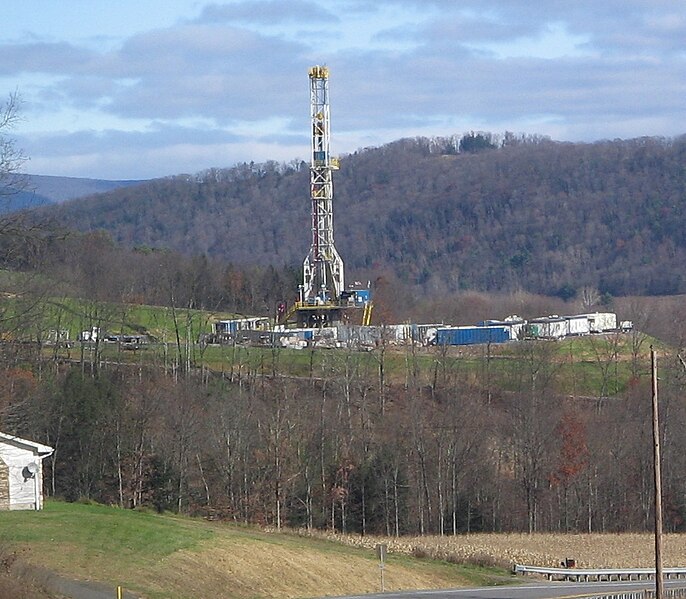
File:Marcellus Shale Gas Drilling Tower 1 crop.jpg
by Andrew Boslett, Todd Guilfoos, Corey Lang all of the University of Rhode Island, USA; 214 Coastal Institute, 1 Greenhouse Rd., Kingston, RI 02881, USA.
Journal of Environmental Economics and Management (JEEM) via Elsevier Science Direct www.ScienceDirect.comVolume 77; May, 2016; Available online 23 December 2015; Pages 14–30
Keywords: Shale gas development; Hydraulic fracturing; Hedonic valuation; Expectations; Rational expectations; Moratorium; Difference-in-differences; Border discontinuity

Tuesday, June 5, 2012

Schenectady Wastewater Plant Upgrades Generate Energy Savings, Assisted with Funding - New Combined Heat and Power System to Turn Methane Gas into Electricity, Recaptures Waste Heat for Use in Sewage Processing

http://tinyurl.com/7x6ajw4
The City of Schenectady’s Water Pollution Control Plant unveiled a $7 million project on May 2, 2012 that will allow the facility to save a significant amount of energy. It includes a combined heat and power (CHP) system that produces biogas and uses an internal combustion engine to create electricity.

The New York State Energy Research and Development Authority (NYSERDA) provided a $1 million award toward the cost of the CHP project.

“By generating electricity from biogas and capturing the extra heat to help with processing waste, the City of Schenectady is getting a two-for-one deal in clean energy,” said Francis J. Murray Jr., President and CEO of NYSERDA. “Combining anaerobic digestion and CHP makes sense at any facility that processes a large amount of organic waste materials. The city should be commended for its effort to reduce its energy costs and greenhouse gas emissions.”

With the new equipment, the plant will generate an estimated 1,800 megawatt-hours of electricity per year from the biogas – enough to power more than 275 private homes for a year. This will offset the energy costs of the plant and, combined with other improvements, save an estimated $300,000 in energy costs each year.
...
The CHP system uses anaerobic digestion, a process that breaks down biological materials, to produce the biogas. At the plant, sewage is treated and the thickened sludge is mixed and heated to allow the waste to break down and generate methane. The methane is purified and combusted to generate electricity.

In an added energy-efficiency feature, the Schenectady equipment recaptures the waste heat from burning fuel and reuses it to enhance the digestion process and provide heat to two buildings. The entire process also reduces odors and results in a finished product that can be used for compost.

The Schenectady plant treats an average of 14 million gallons per day of wastewater. The plant serves about 85,000 area residents in all...

The CHP system was part of a $7 million rehab of the facility, which dates back to the early 1900s and was still using equipment that was more than 50 years old. Work also included new technology that reduces the water content of sludge before processing, new equipment to insulate and seal the anaerobic chamber and equipment to remove acidic hydrogen sulfide from the biogas, which protects equipment from corrosion.

A U.S. Department of Energy grant of $600,000 helped to pay for some of the work at the plant, as well as a general energy-efficiency study for the city.

New York State Energy Research and Development Authority (NYSERDA) www.nyserda.ny.gov
Press Release dated May 2, 2012

Saturday, June 2, 2012

NYSERDA, Beacon Glass Announce Significant Savings With Energy-Efficient Glass Furnace

http://tinyurl.com/7mkpatt
A three-year, $214,000 energy efficiency and waste reduction experiment has paid off for Beacon Glass and the New York State Energy Research and Development Authority (NYSERDA).

The two organizations partnered to experiment with a new type of glass-melting furnace, which had the potential to save energy for the small craft firm in the city of Beacon, as well as other glass companies around New York State.

Today, the company reports it lowered its energy use by 32 percent, and saved considerable material costs. The computer-controlled furnace was funded equally by NYSERDA and Beacon Glass, with each providing $107,000. The project was meant to show other glass companies the value in investing in energy-efficient technology.

Besides the energy savings, the new technology helped the company survive during the recent economic downturn by reducing waste and allowing the company to use a less expensive glass recipe that melts at a lower temperature.

“Glass manufacturing requires a tremendous amount of energy. We are pleased to have helped Beacon Glass achieve significant energy savings, and encourage other manufacturers to make similar investments,” said Francis J. Murray Jr., President and CEO of NYSERDA. “This is the perfect example of how public and private partnerships, under the leadership of Governor Cuomo, are helping companies reduce their operational expenses while creating a robust clean-energy economy in New York.”

Beacon Glass, which has seven employees, is a 25-year-old company made up of two divisions -- Architectural Glass Inc., which makes glass tiles, light fixtures and other products for commercial use, and Hudson Beach Glass Inc., which makes functional and artistic products for retail and wholesale markets.
...
In 2008, the company partnered with NYSERDA to purchase a computer-controlled and heat-recuperation furnace, which uses a ceramic crucible. The ceramic crucible is a freestanding container that contains the raw materials, which are melted into glass at temperatures of 2,285 degrees Fahrenheit. The use of the crucible allows the furnace to operate more energy-efficiently.

The company melts 100,000 pounds of glass each year.

Previously, Beacon Glass used a tank furnace to melt glass. That technology needed to be replaced every three years, at a cost of up to $20,000. Using the crucible design, only the crucible needs to be replaced. It lasts up to four months (more than 100 melts) and costs $1,200.

The crucible also wastes less melted glass. Using the tank furnace, the company had been losing 25 percent of its product during the melting process, or about 500 pounds a week. Changing furnaces reduced this amount by three-quarters.

Most importantly, the new equipment can be heated at a lower temperature and does not need to remain hot constantly, because it heats up quickly.
...
The Glass Arts Society of Seattle, Wash. estimates there are around 1,000 glass companies in the United States with more than one employee that could benefit from improved furnace efficiency.

New York State Energy Research and Development Authority (NYSERDA) www.nyserda.ny.gov
Press Release dated May 8, 2012

Friday, January 20, 2012

Rensselaer Polytechnic Institute Receives High Performance Energy Efficiency Award from NYSERDA

http://is.gd/2wiUw8
The New York State Energy Research and Development Authority (NYSERDA) recognized Rensselaer Polytechnic Institute (RPI) with a High Performance Building Plaque for energy-saving investments that will reduce energy costs by $223,513 annually.

RPI’s construction of Phase I of its East Campus Athletic Village, a new basketball arena and stadium adjacent to the Houston Field House on the Troy campus, was supported by $404,491 in NYSERDA incentives, which leveraged $3.1 million in other investment. The project’s energy-efficiency improvements included high-efficiency lighting, demand control ventilation, variable speed drives on a cooling tower fan, fan motors and water pumps.

The energy savings—1,173,020 kilowatt hours—is equivalent to the amount of electricity consumed by 170 single-family homes annually and will be realized by the institution every year for years to come.

The facility’s energy efficiency improvements will reduce energy consumption, decrease demands on the utility’s distribution system, increase occupant comfort and decrease the environmental impacts of the construction process.  The improvements also helped RPI achieve LEED Gold certification.
...
NYSERDA High Performance Building Plaques are presented to hospitals, colleges and universities, schools, businesses and other organizations that have constructed or substantially renovated buildings to perform at least 30 percent above the New York State Energy Conservation Construction Code.  RPI’s East Campus Athletic Village is rated to perform 33 percent above code.

Plaques were also awarded in the Capital Region to Arbor Hill Branch and New Scotland Avenue Branch as these buildings are slated to perform 36.3 and 44.6 percent above code respectively.

Since 2009, NYSERDA has provided more than $1.8 million to help reduce electricity consumption by approximately 15.3 million kilowatt hours in 9 new construction projects throughout Rensselaer County - the equivalent of the annual electricity consumption of nearly 2,228 single-family homes.

New York State Energy Research and Development Authority (NYSERDA) www.NYSERDA.org
Press Release dated January 19, 2012

Sunday, June 12, 2011

Prices Fall for Some Gas-Rich Shale Land

http://www.nytimes.com/2011/06/10/business/10views.html
The gas-rich land of the Marcellus shale has offered some of the hottest wildcat real estate in recent years. But if Exxon Mobil’s recent $1.7 billion acquisition is any indication, the days of eye-watering prices are over. The oil titan is paying barely half the price such acres were fetching last year, as the frenzy has shifted to Texas. Cheaper real estate may even make gas assets look appealing again.

Exxon is paying about $5,000 an acre by buying Phillips Resources and TWP, two private drillers in the Marcellus, which spans Pennsylvania, New York and West Virginia. This may not seem like such a steal when compared with 2006 prices of around $100 an acre. Even so, it does suggest that energy land values are coming off the boil.

The property boom reached its peak when Chesapeake Energy doled out $17,000 an acre in early 2010, according to research from IHS. Mitsui and India’s Reliance Industries both paid $14,000 an acre in the spring of 2010. As recently as December, Exco Resources was willing to pay $9,000.

There are good reasons the froth has come out of Marcellus. Gas prices have been in the doldrums and are running about a third their 2008 peak. Meanwhile, state regulators are taking a tougher line on hydraulic fracturing, supported by a skeptical public. This has sent energy firms flocking to the oilier Eagle Ford Shale, which is now experiencing a property boom of its own. Marathon Oil paid $20,000 an acre for oil-rich land in Texas earlier this month.

But with less hype built into land values, the Marcellus is looking like a good bet again. The glut of gas that depressed prices is finally clearing. And because of its proximity to the New York market, gas from the Marcellus sells for a premium. Shell’s announcement that it is mulling a new petrochemical plant in the region suggests more demand may be on its way.
...
By Christopher Swann and Reynolds Holding
The New York Times www.NYTimes.com
June 9, 2011
FOR FULL STORY GO TO:
http://www.nytimes.com/2011/06/10/business/10views.html

Sunday, May 8, 2011

Residents clued in to recycling - Schenectady undertakes a campaign to change the way it handles trash disposal - Times Union

http://www.timesunion.com/local/article/Residents-clued-in-to-recycling-1344330.php
... Anthony Verrigni, ... of the city's waste collection team, walked door-to-door in the Bellevue neighborhood....

He and other workers were delivering informational booklets that officials hope will convince residents to raise the city's abysmal recycling rate, which stands at only 8 percent of the total annual trash haul.
...
Verrigni will have to come up with something original to serenade the city's new educational program, which hopes to elevate recycling rates above 20 percent to save taxpayers up to $400,000 on waste hauling costs.

The city originally considered going to a single-stream system, whereby Schenectady would provide large cans to each household that would require no sorting. But at a cost of $1.5 million just to buy the cans, and little room on some narrow streets to hold them, re-educating the population about recycling is currently the only option, said Commissioner of General Services Carl Olsen. When Schenectady started picking up recycling in 1992, trash waste was reduced by 25 percent. Olsen blames the city for stopping educational efforts, which are essential when dealing with an urban transient population. 'If people have the information, most people will comply,' he said.

This week, waste collection workers are hand-delivering recycling booklets to about 2,000 households in the Bellevue and Mont Pleasant neighborhoods. The city will determine if recycling increases in those areas and adjust the educational program as it moves to other areas. The materials will be given to kids at bus stops to take home to their parents. A waste department Twitter account has even been created to keep residents abreast of the campaign.
...
Read the city of Schenectady's new recycling booklet at www.cityofschenectady.com. Follow the recycling educational program on Twitter at schenectadywastedept.

By LAUREN STANFORTH
The Albany Times Union http://www.timesunion.com
April 20, 2011
http://www.timesunion.com/local/article/Residents-clued-in-to-recycling-1344330.php