Showing posts with label Urban. Show all posts

Thursday, April 6, 2017

Good parks – bad parks: the influence of perceptions of location on WTP and preference motives for urban parks

Abstract:
Urban parks generate substantial public benefits, yet explicit economic assessments of such values remain relatively rare. Surveys of willingness to pay (WTP) were undertaken to assess such values for proposed new parks. The analysis assessed how preference motives and values varied according to the location of parks. Results revealed greater altruistic motivation and higher overall values for the creation of inner city as opposed to suburban parks. Spatial decomposition revealed that, after controlling for other determinants such as incomes, values generally increase for households closer to proposed parks, but that a significant downturn in values is evident for households located very close to a proposed inner city park; a finding which echoes concerns regarding the potential for such sites to provide a focus for antisocial behaviour. While these findings provide strong overall support for provision of public parks they highlight, the importance of perceptions of location and the potential for localised dis-benefits.
...
Suveys were administered face to face at participant’s homes. This enabled us to remind respondents of their budgetary constraints as well as the existence of potential substitute sites. Participants were informed that “we are researching the value of parks to the people of Norwich” and wished to interview people about their experiences and views.... Participants were shown stock photos of a verdant English park and informed that the park once complete would look like the photograph.... They were asked in an open ended format to explain their choice and to categorise their expected usage of the park into one of four categories.... Interviewers explained that the significant costs of creating the new parks would be met through an increase in their annual council tax bill.
File:River Yare, Earlham Park - geograph.org.uk - 1397889.jpg

Key results are in the table below:

 
...
The Tobit models produce very similar aggregate values for park A (Mean based = £1,130,674, Tobit based = £1,297,970) when protestors are ignored.  The inclusion of a lower bound to account for protestors in the Tobit model also resulted in similar values to the equivalent measure based aggregation (mean based = £933,302 Tobit based = 1,140,256). 
...
Results of the CV survey presented in this paper confirm previous findings that parks are highly valued public goods, with the creation of new parks in the city of Norwich having the potential to generate substantial value to residents. The low protest bid rate in the sample suggests that not only do residents have strong preferences towards the creation of new parks but that, at least in principle, they are willing to pay for increased provisioning through a familiar and realistic payment vehicle. Using an ex ante valuation allowed values and preference motives to be compared for two locations revealing significant differences in both mean WTP and its determinants.

Saturday, October 29, 2016

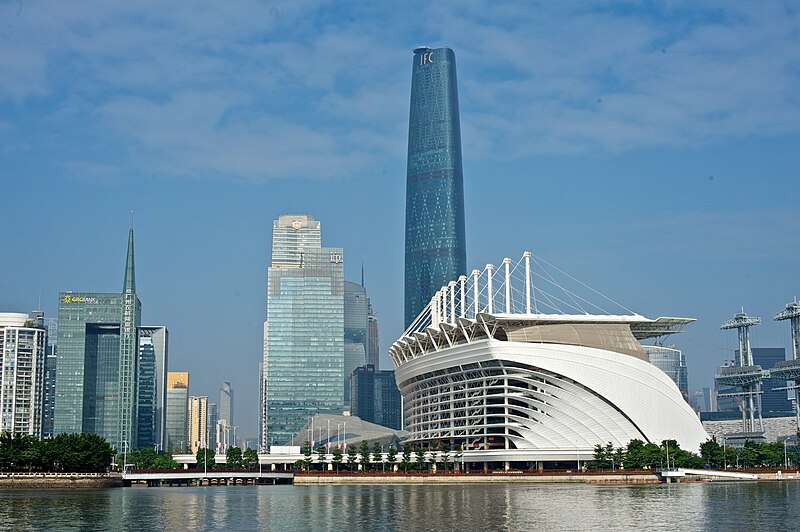
Environmental externalities of urban river pollution and restoration: A hedonic analysis in Guangzhou (China)

Abstract
The degradation of urban river ecosystems presents a serious threat to sustainable urban development. Consequently, extensive efforts have been devoted to the ecological restoration of urban rivers worldwide. This study evaluates the environmental externalities associated with water pollution and river restoration in Guangzhou in southern China. A basic hedonic pricing model is applied to test hypotheses using a sample of 968 apartment transaction records during July-December 2013. Results show that river restoration could reverse negative externalities of polluted watercourses to positive externalities, especially for those apartments located on the 10th floor or lower. Water quality improvement from polluted non-recreational water (Grade V or worse) to non-body contact recreational water (Grade IV) could increase apartment values by 0.9%. River restoration (including river bank greening and water quality improvement) could increase property values by 4.61%, demonstrating a preference of Guangzhou residents for greening riverscapes. This study could hopefully provide a scientific basis for urban river governance for communities and decision-makers, and serve as a reference case to elucidate human preferences about river restoration in rapidly developing countries.
https://en.wikipedia.org/wiki/Guangzhou#/media/File:Guangzhou_(6344321124).jpg
Highlights
• Environmental externalities of river pollution and restoration were investigated.
• River restoration could reverse negative externalities to positive externalities.
• Environmental externalities were associated with property’s vertical dimension.
• The positive externalities of river restoration is attributed to riverine greening.

by Wendy Y. Chen 
Department of Geography, The University of Hong Kong, Pokfulam Road, Hong Kong
Landscape and Urban Planning
Volume 157; January, 2017, Pages 170–179; Available online 6 July 2016
Keywords: River pollution; Urban river restoration; Environmental externality; Hedonic pricing method; Guangzhou

Amenity or hazard? The effects of landslide hazard on property value in Woomyeon Nature Park area, Korea

Abstract:
A nature park in an urban area, which generally includes environmentally valuable natural landscape such as forests, mountains, rivers, and beaches, provides valuable benefits for the public such as recreational opportunities and an aesthetic landscape. However, residents near nature parks could be more vulnerable to natural disasters like floods, tsunamis, and landslides. In order to understand the trade-off between the amenity and hazard effects of nature parks, this study explores the case of the Woomyeon Nature Park (WNP) in Seoul, Korea, which experienced a catastrophic landslide disaster in 2011. The hazard and amenity effects of the WNP before and after a landslide event are analyzed using a difference-in-difference approach with a random coefficient model. The results show that the amenity effect of the WNP has continued after the landslide disaster in apartment complexes near the WNP, but its housing market premiums have fallen by up to 11.3% since the event due to the risk of landslide. The existence of the WNP hazard effect underlines the importance of disaster prevention efforts in urban open space design and management.
Parts of Mt. Umyeon in Seocho in Seoul are washed by torrential rains on Tuesday and Wednesday.
Highlights:
• In Korea, a mountain-type urban nature park increases nearby housing values as a place for leisure and recreation.
• Landslide hazard started to have a negative effect on housing values after the massive landslide event in Woomyeon Nature Park.
• A trade-off between the amenity and hazard effects of urban open spaces exists.
• Disaster prevention efforts in urban open spaces should be combined with landscape and urban planning.

by Jeongseob Kim 1,  (Assistant professor), Junsung Park 1,  (Graduate Student), D.K. Yoon 2, (Associate professor) and Gi-Hyoug Cho 1,  (Assistant professor)
1. School of Urban and Environmental Engineering, Ulsan National Institute of Science and Technology, Ulsan, Republic of Korea
2. Department of Urban Planning and Engineering, Yonsei University, Seoul, Republic of Korea
Received 5 August 2015, Revised 21 July 2016, Accepted 24 July 2016, Available online 28 September 2016
Landscape and Urban Planning via Elsevier Science Direct www.ScienceDirect.com
Volume 157; January 2017, Pages 523–531
Keywords: Landslide hazard; Amenity; Urban nature park; Property value; Hedonic price model