Showing posts with label Beaches. Show all posts

Monday, January 13, 2020

The Impacts of Harmful Algal Blooms and E. coli on Recreational Behavior in Lake Erie

Abstract:
This paper examines simultaneously the effect of E. coli and harmful algal blooms on recreational behavior using survey data collected from Ohio recreators who visited Lake Erie during the summer of 2016. Using simulation based on latent class models of recreation choice, we find beachgoers and recreational anglers would lose in aggregate $7.7 million and $69.1 million, respectively, each year if water quality conditions were to become so poor that Lake Erie’s western basin were closed. Finally, we recover heterogeneity in recreators’ aversion toward algae and Escherichia coli, with beachgoers more averse to E. coli and anglers more averse to algae.
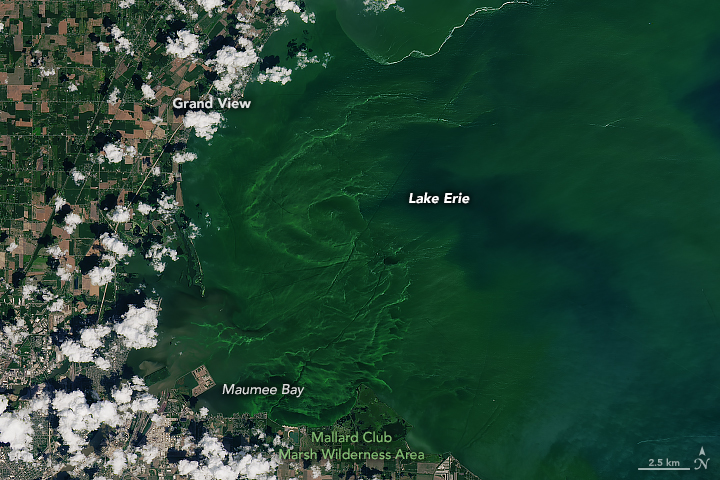
Eerie Blooms in Lake Erie
https://earthobservatory.nasa.gov/images/145453/eerie-blooms-in-lake-erie
by David Wolf 1, Wei Chen 2, Sathya Gopalakrishnan 3, Timothy Haab 4 and H. Allen Klaiber 5
1. Assistant professor, Department of Economics, University of Wisconsin–Eau Claire; wolfdm@uwec.edu
2. Assistant professor, School of Agricultural Economics and Rural Development, Renmin University of China, Beijing, PR China; chen.4863@osu.edu
3. Associate professor, Department of Agricultural, Environmental, and Development Economics, The Ohio State University, Columbus; gopalakrishnan.27@osu.edu
Professor, Department of Agricultural, Environmental, and Development Economics, The Ohio State University, Columbus; haab.1@osu.edu
5, Professor, Department of Agricultural, Environmental, and Development Economics, The Ohio State University, Columbus; klaiber.16@osu.edu
http://le.uwpress.org/content/95/4/455.abstract
Land Economics http://le.uwpress.org/ via University of Wisconsin Press http://www.uwpress.org/
Volume 95, Number 4; November 1, 2019; pages 455-472

Saturday, May 13, 2017

Putting a value on injuries to natural assets: The BP oil spill

Summary:
When large-scale accidents cause catastrophic damage to natural or cultural resources, government and industry are faced with the challenge of assessing the extent of damages and the magnitude of restoration that is warranted. Although market transactions for privately owned assets provide information about how valuable they are to the people involved, the public services of natural assets are not exchanged on markets; thus, efforts to learn about people's values involve either untestable assumptions about how other things people do relate to these services or empirical estimates based on responses to stated-preference surveys. Valuation based on such surveys has been criticized because the respondents are not engaged in real transactions. Our research in the aftermath of the 2010 BP Deepwater Horizon oil spill addresses these criticisms using the first, nationally representative, stated-preference survey that tests whether responses are consistent with rational economic choices that are expected with real transactions. Our results confirm that the survey findings are consistent with economic decisions and would support investing at least $17.2 billion to prevent such injuries in the future to the Gulf of Mexico's natural resources.
...
The federal judge in an initial phase of the lawsuit involving BP determined that the best estimate of the amount of oil released was 134 million gallons, making it the largest maritime oil spill in U.S. history. On behalf of the trustees of the Gulf's natural resources and under the guidance of the lead agency for this process, the U.S. National Oceanic and Atmospheric Administration (NOAA), we estimated the monetary value of the natural resource damage from the spill, as specified by the Oil Pollution Act (OPA) of 1990. Such estimates can inform settlement negotiations between the government and the responsible parties, be entered as evidence at trial, and contribute to choosing projects to restore injured environmental resources (1). Trustees undertook a number of studies to quantify ecological impacts and economic damages caused by the spill, including what we describe here. The natural resource–damage case was settled in April 2016. The Consent Decree called for total payments of $20.8 billion, $8.8 billion of which was for natural resource damages. Decisions related to the settlement details are confidential.

Economic measures of the damages to natural resources consider the effects on use (or active use) and nonuse (or passive use) values (2). “Use values” arise when an individual derives satisfaction from using a resource (e.g., fishing or visiting a beach), either now or in the future. “Nonuse values” arise when an individual derives satisfaction from the existence of a resource, even though that individual would not visit or use it. The OPA regulation specifies that damage measures include both use and nonuse or the total economic value lost. Private claims by those engaged in commercial fishing or in operating hotels are handled separately.

After the 1989 Exxon Valdez oil spill and controversy over assessing monetary damages with stated-preference surveys, an expert panel (3) recommended criteria for conducting these studies. Research has since established ways to ask stated-choice questions that induce truthful responses and meet these proposed criteria. Subsequent criticism of stated-preference research has focused on how large the change in the average person's value should be with changes in the size of injuries to natural resources. The research we discuss here identified what can be expected on the basis of a conventional economic model of an individual's choices, with minimal assumptions. It also offers evidence that the average individual's likelihood to vote for a program to avoid injuries is causally linked to a consistent understanding of the severity of the injuries.
...
The study interviewed a large random sample of American adults who were told about (i) the state of the Gulf before the 2010 accident; (ii) what caused the accident; (iii) injuries to Gulf natural resources due to the spill; (iv) a proposed program for preventing a similar accident in the future; and (v) how much their household would pay in extra taxes if the program were implemented. The program can be seen as insurance, at a specified cost, that is completely effective against a specific set of future, spill-related injuries, with respondents told that another spill will take place in the next 15 years. They were then asked to vote for or against the program, which would impose a one-time tax on their household. Each respondent was randomly assigned to one of five different tax amounts: $15, $65, $135, $265, and $435.
The final questionnaire was administered to a random sample of households in the contiguous United States that included at least one English-speaking adult. Face-to-face interviews were completed between October 2013 and July 2014 by nearly 150 trained interviewers. A total of 3,656 people completed the survey for a weighted response rate of 48%. A nonresponse followup (NRFU) survey involved mailing paper questionnaires to households at which no main study interview had been completed. NRFU questionnaires were received from 1492 households, representing a NRFU household response rate of 51% (see SM for details of weighting and nonresponse)....

For each injury description, support for the program declines as the tax increases, consistent with the first test for consistent decisions. For each tax amount, support for the program increases as the set of injuries increases, consistent with the second test.
The estimate for the lower-bound mean WTP for the smaller set of injuries is $136 (standard error $6.34) and for the larger set is $153 (standard error $6.87). The aggregate estimate reported at the outset—$17.2 billion—uses the WTP lower-bound estimate for the larger set of injuries ($153) multiplied by the number of households (112,647,215) represented by the sample.
...
by Richard C. Bishop, Kevin J. Boyle, Richard T. Carson, David Chapman, W. Michael Hanemann, Barbara Kanninen, Raymond J. Kopp, Jon A. Krosnick, John List, Norman Meade, Robert Paterson, Stanley Presser, V. Kerry Smith, Roger Tourangeau, Michael Welsh, Jeffrey M. Wooldridge, Matthew DeBell, Colleen Donovan, Matthew Konopka, Nora Scherer
Volume 356, Issue 6335;  21 Apr 2017; pages 253-254

Wednesday, March 1, 2017

Beach Recreationalists' Willingness to Pay and Economic Implications of Coastal Water Quality Problems in Hawaii

Abstract:
The economic value of water quality is poorly understood in Hawaii. Quantifying the economic value of coastal water quality would inform policy decisions that impact the coast and help justify expenditures in water quality improvements. We conducted a non-market valuation of beach recreationalists’ preferences and willingness to pay for water quality and associated attributes at Oahu beaches. Using a discrete choice experiment analyzed by a conditional logit model, results suggest individuals were willing to pay $11.43 per day at the beach to reduce days of bacterial exceedance from 11 to 5 per year, a further $30.72 to reduce it to no bacterial exceedances at all. WTP to move from 15 ft to 30 ft of underwater visibility was $35.71, a further $14.80 to increase from 30 ft to 60 ft. Respondents were also willing to pay $15.33 to improve coral reef cover from 10% to 25%, a further $4.89 to improve to 45% cover. WTP for moving from 9 fish species to 18 species was $7.14, a further $2.47 to increase that to 27 fish species. These environmental improvements can improve Oahu recreationalists’ welfare by $205 million, $550 million, $639 million, $265 million, $274 million, $88 million, $128 million, and $44 million per year, respectively. Welfare gains may justify increased spending in management and restoration of coastal ecosystems.
File:Sea turtles on beach in hawaii.jpg
by Marcus Peng 1 and Kirsten L.L. Oleson 1 and 2
1. University of Hawaiʻi at Mānoa Department of Natural Resources and Environmental Management, 1910 East-West Road, Honolulu, Hawaii, USA
2. University of Hawaiʻi Economic Research Organization, 2424 Maile Way, Honolulu, HI, USA
Ecological Economics via Elsevier Science Direct www.ScienceDirect.com
Volume 136, June 2017, Pages 41–52, Available online 17 February 2017
Keywords: Non-market valuation; Discrete choice experiment; Water quality; Underwater visibility; Coral reefs; Fish diversity; Beach recreation; Oahu; Hawaii

Monday, February 15, 2016

Economic Valuation of the Philippine’s Caramoan Beachscape

Abstract:
This study determined the tourists’ willingness to pay (WTP) for the conservation of Caramoan beachscape in Camarines Sur, Philippines, as inputs in establishing the appropriate payment for environmental services for the sustainable development of ecotourism and coastal resource management of the area. The study employed the contingent valuation method (CVM) using four analytical models.
Based on the results, majority of the Caramoan tourists are younger, adventurous, without familial obligations, and highly educated and earn a relatively high income. One half of the visitors are willing to pay to promote the sustainability of the beachscapes. The visitors’ WTP in the general model was estimated to be PHP 897. The average monthly visitors were estimated to be 1,000 tourists per month. Using these data, the total economic value of conserving the beachscapes in Caramoan was estimated to be PHP 10.76 million annually. Bid amount, age, and income were the only factors that consistently correlated with WTP in all of the analytical models. This indicates that younger visitors and those who have higher income are more likely to be willing to pay for conservation.

The estimated economic value of conserving the Caramoan beachscape justifies the relevance of investing public funds to pursue sustainable beachscape ecotourism development in Caramoan. This study is an attempt to contextualize PES for beachscape. It highlighted the priority concerns for sustainable source of fund for conservation and harmonized institutional arrangements for beachscape tourism and coastal resource management. It supported the potential of implementing PES within a community-based coastal resource management framework under a marine fishery reserve-sanctuary setting comanaged by the community and the Caramoan LGU or within a natural protected area framework managed by the Caramoan Natural Park Protected Area Management Board.

by Raul G. Bradecina
Chapter in book Marine and Coastal Ecosystem Valuation, Institutions, and Policy in Southeast Asia
February 4, 2016 pages 17-30
Keywords: Beachscape valuation Coastal resource management Payment for environmental services Caramoan

Tuesday, December 22, 2015

Economic Value of the Kogelberg Coast, Western Cape, South Africa

Abstract:
The amenity value of the Kogelberg Coast of South Africa was estimated on the basis of a survey of users, property data and park visitor statistics, as well as spatial data on coastal features, development and recreational activities. In addition to the permanent population of about 13 000, visitors spend an estimated 4.3 to 5.3 million visitor days per year, of which holiday home owners, other overnight visitors and day visitors account for about 22 percent, 56 percent and 21 percent, respectively. Coastal activities contributed 71 percent to all users’ enjoyment of the area. Two-thirds of visitors in summer were beach-oriented visitors and the remainder were fishing and water sport-oriented. While most South Africans were on single destination trips, going to the Kogelberg area was only 59 percecnt of the reason for their trip for foreign visitors, who tended to be visiting multiple destinations. Coastal cleanliness and bathing safety were the most essential coastal attributes for visitors, followed by the adjacent mountainous terrestrial environment and marine wildlife. Visitor expenditure attributable to the Kogelberg coast, in Rands, was estimated to be in the range of R191 to 235 million per annum. Boat-based whale-watching in the area brought an additional R1.39 million accruing to towns outside the area. Coastal property in the area was worth approximately R7.3 billion, generating an estimated annual economic output of R59 million. Thus, the recreational value of the coast was estimated to be on the order of R272 million per annum. Simple scenario evaluation suggested that the value of the coast could be increased most by eradicating crime. Other scenarios that result in a significant increase in value include expanding the marine protected area system, as long as fishing catches in surrounding areas increase, and better enforcement of environmental laws. Litter would have the greatest negative impact on value, followed by a substantial increase in the number of houses or a substantial decrease in the number of cetaceans. 
by Jane Turpie and John de Wet
Resources For the Future (RFF) www.RFF.org
Discussion Paper November 29, 2015

Friday, January 17, 2014

Economic valuation of preventing beach erosion: comparing existing and non-existing beach markets with stated and revealed preferences

http://www.tandfonline.com/doi/full/10.1080/21606544.2013.863742
Abstract
Predicted climate change is likely to increase beach erosion in the future, inducing higher costs of beach maintenance. Hence, additional funds for their protection will be required. We examine the willingness to pay (WTP) of beach visitors for preventing beach erosion in the form of daily beach entrance fees in Crikvenica, Croatia, by applying the contingent valuation method. This is the first beach valuation study for this country in transition which has emerged as an important Mediterranean tourist destination. The novelty of our study is that it compares WTP estimates for an existing and a non-existing beach market. This is done by conducting a survey at the beach where an entrance fee is already levied and at the nearest open-access beach. Based on the initial (follow-up) valuation question, the stated WTP per adult per day for avoiding beach erosion equals €1.69 (€1.26) for the paid beach and €2.08 (€1.84) for the free beach. In addition, the travel cost method is employed. It reveals that consumer surpluses for visiting the paid and the free beach amount to €2.57 and €1.74, respectively.
by Ivana Logarab* & Jeroen C.J.M. van den Berghacde
Journal of Environmental Economics and Policy via Taylor and Francis www.tandfonline.com
Volume 3, Issue 1; 2014; pages 46-66; DOI: 10.1080/21606544.2013.863742; Published online: 05 Dec 2013
Keywords: contingent valuation, Croatia, entrance fees, stated and revealed preferences, travel cost method

Saturday, May 18, 2013

The Gulf Oil Spill and Its Impact on Coastal Property Value Using the Before-and-After Procedure

Abstract:
The before-and-after procedure is applied to Coastal Alabama property to estimate the economic loss in property value caused by the 2010 Gulf of Mexico Oil Spill. The project is unique in that it relies on market trends shown in the total population of deed recordings allowing the total impact to be estimated with the dynamic nature of a potential stigma. The results indicate that the oil spill has minimal influence on property value for waterfront condos and single-family residential, and approximately −16% in value on waterfront vacant residential land.
Deepwater Horizon oil spill - May 24, 2010 - with locator.jpg
The oil slick as seen from space by NASA's Terra satellite on 24 May 2010

 
by Donald Epley, University of South Alabama, Mobile, AL 36608
Journal of Real Estate Literature published by the American Real Estate Society
Volume 20; Number 1; 2012; Pages 121-137
A free 2011 version of the report is available at: 
http://www.southalabama.edu/mcob/realestate/documents/appraisal/impactspillonpropertyvalueapril2011.pdf

Friday, June 3, 2011

Coastal sustainability depends on how economic and coastline responses to climate change affect each other

http://www.agu.org/pubs/crossref/2011/2011GL047207.shtml
Abstract: Human-induced climate change is predicted to accelerate sea level rise and alter storm frequency along the US east coast. Rising sea level will enhance shoreline erosion, and recent work indicates changing storm patterns and associated changes in wave conditions can intensify coastal erosion along parts of a coastline. Investigations of coastal response to climate change typically consider natural processes in isolation — neglecting repeated changes to the coastline from human actions, primarily through shoreline nourishment projects, which add sand to the shoreline to counteract erosion. In a model coupling economically driven shoreline nourishment with wave- and sea level rise-driven coastline change, and accounting for dwindling sediment resources for nourishment, coastline response depends dramatically on the relationship between patterns of property value and erosion. Simulations show that when nourishment costs rise with depletion of sand resources, coastline change is tied to the interaction between patterns of erosion and property value. Simulations show that when high property values align with highly erosive locations, sand resources are depleted rapidly and nourishment in lower property value towns is quickly abandoned. Although our model simulates a particular coastal morphology, the result that future behavior of the coastline and the economic viability of nourishment in a given town depend on the regional interaction between patterns of property value and erosion is likely applicable to many coastal configurations. More broadly, coupling economic and physical models reveals equity and sustainability implications of coastal climate adaptation as well as patterns of coastline change that a physical model alone would overlook.

by Dylan E. McNamara 1, A. Brad Murray 2, and Martin D. Smith 3
1. Department of Physics and Physical Oceanography, Center for Marine Science, University of North Carolina, Wilmington, North Carolina, USA
2. Nicholas School of the Environment, Center for Nonlinear and Complex Systems, Duke University, Durham, North Carolina, USA
3. Nicholas School of the Environment, Department of Economics, Duke University, Durham, North Carolina, USA
Geophysical Research Letters
Volume 38, L07401; published 5 April 2011; 5 pages
doi:10.1029/2011GL047207

Sunday, May 8, 2011

CoreLogic Storm Surge Report Shows More Than $300 Billion In Residential Property Damage Exposure in Ten Major U.S. Cities

http://tiny.cc/gbx17
Long Island and Miami Could Suffer Highest Potential Loss to Hurricane Storm Surge Flooding

On May 3, 2011 CoreLogic (NYSE: CLGX) ... released a report detailing potential exposure to storm surge property damage in ten major urban areas along the U.S. Gulf and Atlantic Coasts. The 2011 CoreLogic Storm Surge Report revealed hurricane-driven storm surge flooding could cause billions in damage to residential structures in 2011. CoreLogic developed the Storm Surge Report to enhance understanding of the heightened risk that storm surge waves pose to homes located in areas prone to tropical storms. The report complements the Federal Emergency Management Agency (FEMA) flood zone information to provide a complete picture of potential damage exposure at the property level. Many properties located outside designated flood zones are still at risk for storm surge damage.

Storm surge is triggered primarily by the high winds and low pressure associated with hurricanes, which cause water to amass inside a storm as it moves across the ocean and release as a powerful rush over land when the hurricane moves on shore. In addition to the property damage and lives lost to flooding, the speed and force associated with storm surge waves can significantly increase geographic and economic impact in hurricane disaster areas. The data is useful for insurance providers and financial services companies in order to understand the potential damage exposure for homes that do not fall into designated flood zones and, therefore, likely do not carry flood insurance, but are still at risk of storm surge.

“The local flood zones defined by FEMA in high-risk coastal regions provide a great deal of exposure data for homes in the path of flood waters, but understanding the additional layer of risk posed by a storm surge is critical for homeowners, emergency response teams, insurance companies and many others to plan and prepare for natural catastrophes,” said Dr. Howard Botts, executive vice president and director of database development for CoreLogic Spatial Solutions. “As the report shows, in many cases, homes exposed to potential storm-surge inundation are located outside of designated flood zones, and those homeowners need to be aware of their vulnerability to severe damage and property losses.”

CoreLogic generated the Storm Surge Report using the company’s comprehensive parcel database. After identifying the top ten high-risk urban areas based on the probability of a hurricane striking, vulnerability to storm surge given on-shore and off-shore geographic attributes and population density, CoreLogic identified all residential properties within a predicted storm surge area and analyzed it against the associated property value of each home. The analysis divided property valuations first by hurricane category, then again within each region by ZIP code. The final results show the current value of all residential properties exposed to potential storm surge damage, and allow for the comparison of properties at risk for storm-surge damage to those properties also located within a FEMA flood zone. Cities examined in the analysis include New Orleans, LA; Mobile, AL; Charleston, SC; Corpus Christi and Houston-Galveston, TX; Jacksonville, Tampa, and Miami-Dade, FL; Virginia Beach, VA and Long Island, NY.

Of the metro areas studied in the report, Long Island was found to have the highest exposure to risk, valued at $99 billion, followed by the Miami-Palm Beach region and Virginia Beach. Projected exposure to storm surge damage for the ten geographies is as follows:

Long Island, NY – $99 billion
Miami-Dade, FL – $44.9 billion
Virginia Beach, VA – $44.6 billion
New Orleans, LA – $39 billion
Tampa, FL – $27 billion
Houston, TX – $20 billion
Jacksonville, FL – $19.6 billion
Charleston, SC – $17.7 billion
Corpus Christi, TX – $4.7 billion
Mobile, AL – $3 billion

Other key findings include percent of homes located in flood and surge zones and total individual properties at risk in each geographic region. The report indicates the majority of homes at risk for storm surge damage within the ten metro areas are in fact located outside of FEMA-defined flood zones. For example, 87.4 percent of surge-inundation zone properties are not in a flood zone in Virginia Beach while only 12.2 percent of at-risk homes are positioned in both surge and flood zones. Among the densely populated coastal regions with the highest number of individual properties exposed to storm surge damage are Virginia Beach, with nearly 289,000 properties, New Orleans, with more than 278,000 properties and Tampa, with more than 277,000 homes at risk.

The 2011 CoreLogic Storm Surge Report also points out the effects of man-made mitigation efforts in the New Orleans metro area. According to the report, reconstruction efforts over the past six years, which included raising area levees, rebuilding flood walls and creating the massive Lake Borgne Surge Barrier, now provide a greater level of protection from storm surge destruction. Many homes previously designated in a high-risk surge zone now have a significantly lower chance of exposure to property damage.

“The important thing to remember is that though individual homeowners can greatly reduce hurricane wind damage with improvements to buildings and structural design, they are often powerless to mitigate the impact of storm surge and resulting saltwater flooding,” said Dr. Botts. “It’s a common misconception for homeowners to think that if they live outside of a FEMA flood zone they are safe from hurricane-driven storm surge flooding, when in reality their property is vulnerable to the most destructive natural flooding catastrophes that can occur alongside a tropical storm.”

This is the second annual Storm Surge Report that CoreLogic has produced. The methodology was recalibrated to provide a more robust analysis of potential damage and therefore, comparing the 2011 report with the 2010 report might lead to inaccurate comparisons.

For a complete copy of the 2011 CoreLogic Storm Surge Report, visit http://www.corelogic.com/Products/hazard-analytics.aspx

CoreLogic www.CoreLogic.com
Press Release dated May 3, 2011
Saturday, May 7, 2011

The value of disappearing beaches: A hedonic pricing model with endogenous beach width


http://dx.doi.org/10.1016/j.jeem.2010.09.003
Abstract: Beach nourishment is a policy used to rebuild eroding beaches with sand dredged from other locations. Previous studies indicate that beach width positively affects coastal property values, but these studies ignore the dynamic features of beaches and the feedback that nourishment has on shoreline retreat. We correct for the resulting attenuation and endogeneity bias in a hedonic property value model by instrumenting for beach width using spatially varying coastal geological features. We find that the beach width coefficient is nearly five times larger than the OLS estimate, suggesting that beach width is a much larger portion of property value than previously thought. We use the empirical results to parameterize a dynamic optimization model of beach nourishment decisions and show that the predicted interval between nourishment projects is closer to what we observe in the data when we use the estimate from the instrumental variables model rather than OLS. As coastal communities adapt to climate change, we find that the long-term net value of coastal residential property can fall by as much as 52% when erosion rate triples and cost of nourishment sand quadruples.

by Sathya GopalakrishnanaCorresponding Author Contact InformationE-mail The Corresponding Author, Martin D. Smithab, Jordan M. Slotta and A. Brad Murrayac
a Nicholas School of the Environment, Duke University, Box 90328, Durham, NC 27708, USA
b Department of Economics, Duke University, Durham, NC 27708, USA
c Center for Nonlinear and Complex Systems, Duke University, Durham, NC 27708, USA
Received 27 May 2009.  
Available online 14 December 2010. 

Corresponding Author Contact InformationCorresponding author. Fax: +1 919 684 8741. 

Journal of Environmental Economics and Management via Elsevier Science Direct www.ScienceDirect.com
Volume 61, Issue 3; May, 2011, Pages 297-310
Keywords: Beach nourishment; Beach width; Climate change adaptation; Erosion; Hedonic; Morpho-economics; Non-market valuation