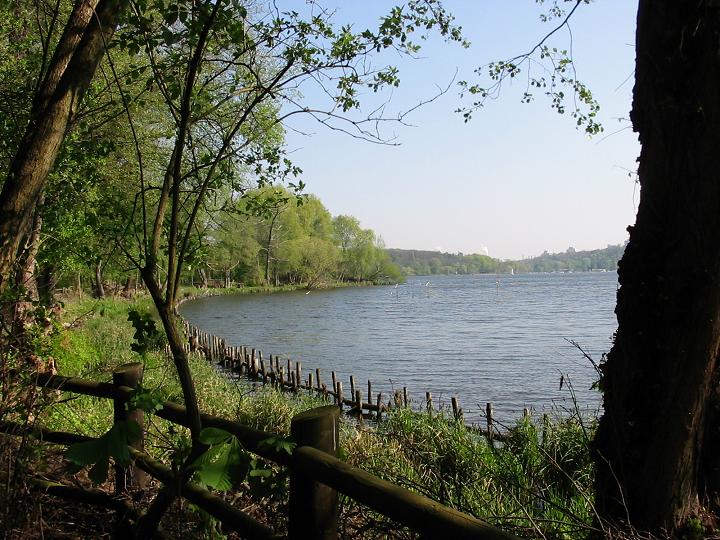
Showing posts with label Parks. Show all posts

Friday, August 11, 2017

Voluntary Contributions to Hiking Trail Maintenance: Evidence From a Field Experiment in a National Park, Japan

Highlights
• We examine the effects of information provision on donation behavior.
• A field experiment was conducted to in Daisetsuzan National Park, Japan.
• Announcing seed money is superior to showing the amount of others' contribution.

Abstract
Donation is one of the most important solutions to inadequate funding for protected area management; however, there has been little agreement on the measures to be used to encourage visitors to donate. We conducted a field experiment in Daisetsuzan National Park, Japan, to examine the effect on donation behavior of providing information about two types of initial contributions. The first type of contribution is toward the fundraising campaign for trail maintenance and the initial amount of government funding (i.e., seed money) and information is provided about the target amount. The second type is for trail maintenance and information is provided on the value of one day's contribution by other participants. We found that announcing the seed money amount and the target significantly increased the probability of a positive contribution and raised the average contribution, compared with the control treatment of no additional announcements. When the participants knew others' contribution beforehand, the likelihood of a positive contribution increased; however, the average contribution tended to decrease. In conclusion, announcing the seed money and the fundraising target is superior to the other measures studied in this paper to raise funds in this specific context of protected area management.
...
With increased demand for biodiversity conservation and maintenance of ecosystem services, the coverage of protected areas expanded rapidly. By 2030, protected areas are likely to reach 15–29% of the surface area of the earth (Chape et al., 2005; Li et al., 2013 ;  McDonald and Boucher, 2011). However, most protected areas do not receive sufficient funding for their management, even though their value has been realized (Emerton et al., 2006). Although these insufficient situations are mostly reported in developing countries (Emerton et al., 2006), other countries also face the challenges of sustainable park management because of poor funding. For example, Olympic National Park in the U.S. needed $13.3 million to operate the park; however, only $7.8 million was available (NPCA, 2015). The Japanese national parks face the same problems, and the government declared a law in 2015 that allows local communities to collect an entrance fee to resolve these problems (Ministry of the Environmental, Japan, 2015). Especially, insufficient funding has significant impacts on the maintenance of trails, visitor centers, and other facilities, and leads to a lack of development of new protected areas even if the costs are relatively small. Although donation or voluntary contribution is one of the most important options to aid in sustainable management of protected areas (Emerton et al., 2006 ;  Thur, 2010), there is still much room to improve fund raising measures in most countries.
...
The surveys were conducted at the Numameguri Hiking Trail (NHT) in the Daisetsuzan National Park, Japan, in mid-September 2015. This is the largest Japanese terrestrial park, receiving approximately 5 million visitors per year (Ministry of the Environmental, Japan, 2016). Visitors are not charged any entrance fee. The NHT is one of the most popular hiking trails in the park because of the beautiful color of leaves in fall. However, visitors face a high risk of bear attacks; thus, they are requested to attend a lecture at an information center at the trailhead before hiking (for detail, see Kubo and Shoji, 2014). In addition, they need to be registered before hiking and are required to report their safety after hiking using a logbook. The NHT faced the risk of an insufficient management budget, especially due to reduced government funding over the last few years. A donation box at the information center was provided to cover the budget shortfall; however, it accumulated only a few thousand JPY1 per year until 2015 (personal communications with park staffs in July 2015). Thus, it was necessary for park authorities to find new measures to encourage park visitors to donate to the park management.
...
The questionnaires that participants in the PREV treatment received had the same information as the control treatment; however, participants were shown the amount that other participants had contributed during the first day of the experiment (40,088 JPY) by using a transparent box and bags, instead of a white box. Thus, participants were able to see a variety of contributions from 1 JPY coins to 1000 JPY notes.
...
Of the 934 participants, 707 participants positively donated and raised a total of 32,5045 JPY. In the control treatment, 67.5% of participants donated. Furthermore, the sample average contribution was 311.3 JPY and the average conditional contribution was 461 JPY. In the SEED treatment, the share and the sample average contribution significantly increased to 81.6% (F = 16.2, p = 0.00) and 396.7 JPY (z = − 3.66, p = 0.00), respectively. The conditional average contribution of the SEED treatment (486.1 JPY) was not statistically different from the control treatment, although it was higher than the control treatment. As for the SEED treatment, the share and the sample average contribution of the PREV treatment also significantly increased to 78.0% (F = 8.56, p = 0.00) and 336.3 JPY (z = − 2.14, p = 0.03), respectively. However, the average conditional contribution of the PREV treatment (431.4 JPY) was smaller than the control treatment, even though the difference was not statistically significant.
File:Daisetsusan national park 2005-08.JPG
https://en.wikipedia.org/wiki/Daisetsuzan_National_Park

Thursday, April 6, 2017

Good parks – bad parks: the influence of perceptions of location on WTP and preference motives for urban parks

Abstract:
Urban parks generate substantial public benefits, yet explicit economic assessments of such values remain relatively rare. Surveys of willingness to pay (WTP) were undertaken to assess such values for proposed new parks. The analysis assessed how preference motives and values varied according to the location of parks. Results revealed greater altruistic motivation and higher overall values for the creation of inner city as opposed to suburban parks. Spatial decomposition revealed that, after controlling for other determinants such as incomes, values generally increase for households closer to proposed parks, but that a significant downturn in values is evident for households located very close to a proposed inner city park; a finding which echoes concerns regarding the potential for such sites to provide a focus for antisocial behaviour. While these findings provide strong overall support for provision of public parks they highlight, the importance of perceptions of location and the potential for localised dis-benefits.
...
Suveys were administered face to face at participant’s homes. This enabled us to remind respondents of their budgetary constraints as well as the existence of potential substitute sites. Participants were informed that “we are researching the value of parks to the people of Norwich” and wished to interview people about their experiences and views.... Participants were shown stock photos of a verdant English park and informed that the park once complete would look like the photograph.... They were asked in an open ended format to explain their choice and to categorise their expected usage of the park into one of four categories.... Interviewers explained that the significant costs of creating the new parks would be met through an increase in their annual council tax bill.
File:River Yare, Earlham Park - geograph.org.uk - 1397889.jpg

Key results are in the table below:

 
...
The Tobit models produce very similar aggregate values for park A (Mean based = £1,130,674, Tobit based = £1,297,970) when protestors are ignored.  The inclusion of a lower bound to account for protestors in the Tobit model also resulted in similar values to the equivalent measure based aggregation (mean based = £933,302 Tobit based = 1,140,256). 
...
Results of the CV survey presented in this paper confirm previous findings that parks are highly valued public goods, with the creation of new parks in the city of Norwich having the potential to generate substantial value to residents. The low protest bid rate in the sample suggests that not only do residents have strong preferences towards the creation of new parks but that, at least in principle, they are willing to pay for increased provisioning through a familiar and realistic payment vehicle. Using an ex ante valuation allowed values and preference motives to be compared for two locations revealing significant differences in both mean WTP and its determinants.

Tuesday, March 7, 2017

Differences in the recreational value of urban parks between weekdays and weekends: A discrete choice analysis

Abstract:
Urban parks offer city residents a broad range of opportunities for recreation. This paper explores whether preferences for urban parks are context-dependent, i.e., whether they differ between recreational occasions on weekdays and weekends. Knowledge about such differences in behaviour and preferences could help decision makers in cities to optimise their portfolio of urban parks. Employing a discrete choice experiment for the case of Berlin, Germany, the analysis finds that preferences significantly differ between weekday and weekend recreation for some park characteristics. For weekdays, respondents prefer urban parks in closer proximity to their homes while the size of the parks is not so important. For the weekend, larger parks with picnic facilities are preferred while distance matters less. Most important are, however, cleanliness and maintenance, regardless of whether a park is visited on weekdays or the weekend. The results underline the importance of considering different temporal contexts when preferences for outdoor recreation are concerned.
Highlights
• Temporal contexts significantly affect recreational preferences of urban residents.
• During the week, distance to parks is of particular importance.
• For the weekend, larger parks are preferred while distance matters less.
• Cleanliness and maintenance are most important for visits at any time of the week.

For a medium size park (10-50 hectares) the Marginal Willingness to Pay for park attributes rises from 19.56 euros on weekdays to 53.03 euros on weekends, for picnic facilities it rises from 32.21 euros to 71.45 euros as shown in the table below.
by Christine Bertram 1, Jürgen Meyerhoff 1 and 2, Katrin Rehdanz 1 and 3, and Henry Wüstemann 2
1. Kiel Institute for the World Economy, Kiellinie 66, D-24105 Kiel, Germany
2. Technische Universität Berlin, Straße des 17. Juni 145, D-10623 Berlin, Germany
3. University of Kiel, Department of Economics, Wilhelm-Seelig-Platz 1, D-24118 Kiel, Germany
Landscape and Urban Planning via Elsevier Science Direct www.ScienceDirect.com
Volume 159; March, 2017; Available online 18 November 2016; Pages 5–14
Keywords: Urban parks; Discrete choice experiment (DCE); Recreational behaviour; Context-dependent preferences; Weekend vs. weekday

Tuesday, January 10, 2017

Synergies between biodiversity conservation and ecosystem service provision: Lessons on integrated ecosystem service valuation from a Himalayan protected area, Nepal

Highlights
• TESSA was used for integrated ecosystem services valuation of Shivapuri-Nagarjun National Park, Nepal.
• Net monetary ecosystem service value of protecting the Park was estimated at $11 million y-1.
• Protection avoided a reduction in carbon stock of 60% and a net annual monetary loss of 19%.
• Conservation and ecosystem service provision objectives were congruent at site-level.
• A buffer zone around the park may improve benefit sharing.

Abstract
We utilised a practical approach to integrated ecosystem service valuation to inform decision-making at Shivapuri-Nagarjun National Park in Nepal. The Toolkit for Ecosystem Service Site-based Assessment (TESSA) was used to compare ecosystem services between two alternative states of the site (protection or lack of protection with consequent changed land use) to estimate the net consequences of protection. We estimated that lack of protection would have substantially reduced the annual ecosystem service flow, including a 74% reduction in the value of greenhouse gas sequestration, 60% reduction in carbon storage, 94% reduction in nature-based recreation, and 88% reduction in water quality. The net monetary benefit of the park was estimated at $11 million year-1. We conclude that: (1) simplified cost-benefit analysis between alternative states can be usefully employed to determine the ecosystem service consequences of land-use change, but monetary benefits should be subject to additional sensitivity analysis; (2) both biophysical indicators and monetary values can be standardised using rose plots, to illustrate the magnitude of synergies and trade-offs among the services; and (3) continued biodiversity protection measures can preserve carbon stock, although the benefit of doing so remains virtual unless an effective governance option is established to realise the monetary values.

Sunday, January 8, 2017

The Effect of Natural Space on Nearby Property Prices: Accounting for Perceived Attractiveness

Abstract
This paper estimates the effect of attractive natural space on Dutch residential property prices. We operationalize attractive natural spaces by combining land use data with unique data on the perceived attractiveness of natural spaces. In our main results, the effect of attractive natural space on property prices falls from 16.0% for properties within 0.5 km, to 1.6% for properties up to 7 km away. Our findings advance existing hedonic studies by verifying that economic benefits of living near natural space extend over a larger distance. This has important implications for public policy regarding investment in natural space near residential areas. 
Picture of Natural Ice pastime (Netherlands): Winter scene in the Alblasserwaard: skating through a town
http://le.uwpress.org/content/92/3/389.abstract
by Michiel N. Daams, Frans J. Sijtsma, and Arno J. van der Vlist
Land Economics http://le.uwpress.org/ via University of Wisconsin Press
Volume 20, Number 3; August, 2016; pages 389-410

Sunday, December 18, 2016

Planning for green infrastructure: The spatial effects of parks, forests, and fields on Helsinki's apartment prices

Highlights
• Spatial effects of forests, parks, and fields on apartment prices are estimated.
• Forests generate indirect benefits in the urban core and direct in the urban fringe.
• Parks generate direct and indirect benefits in the urban core.
• Fields generate direct benefits in the urban fringe and no indirect spillovers.
• Successful green interventions are location-, benefit-, and goal-sensitive.

Abstract
As the importance of urban green spaces is increasingly recognised, so does the need for their systematic placement in a broader array of socioeconomic objectives. From an urban planning and economics perspective, this represents a spatial task: if more land is allocated to various types of green, how do the economic effects propagate throughout urban space? This paper focuses on the spatial marginal effects of forests, parks, and fields and estimates spatial hedonic models on a sample of apartment transactions in Helsinki, Finland. The results indicate that the capitalization of urban green in apartment prices depends on the type of green, but also interacts with distance to the city centre. Additionally, the effects contain variable pure and spatial spillover impacts, also conditional on type and location, the separation of which highlights aspects not commonly accounted for. The planning of green infrastructure will therefore benefit from parameterizing interventions according to location, green type, and character of spatial impacts.
...
The full-sample estimation explained 78% of price variation and returned the expected signs for all hedonic coefficients, except for that of distance to a forest. An increase in the debt and maintenance costs and a decrease in the condition of the property decreases price/m2. Additional rooms have a negative effect, reflecting the diminishing marginal utility of additional units of space. Increase in the property's age decreases price until historical status becomes relevant and price increases again. The yearly dummy variables are significant, indicating a drop in the average level of selling price/m2 from 2000 to 2001, followed by an increase from 2002 onwards. Increased distance to the city centre and coastline decrease price, whereas lot size is not significantly different from zero. The coefficients of the proxies for noise and air pollution disamenities are significant; a 100-meter increase in distance to rails increases average m2 price by 0.15%, while the corresponding increase for over-ground metro line is 0.19% and for major road is 0.36%.
Kuva: Roy Koto/ Viherosasto

The estimation supported the assumption of a CBD gradient in the marginal effects of parks and fields. Increased distance to a park decreases prices in the city centre, or, conversely decreasing the distance of a downtown property to a park increases its price, with the effect gradually declining as distance to the CBD increases. The maximum effect is estimated to a decrease of 1.5% in the m2 price when distance to a park increases 100 m, which is in the same range to the effect of recreational forests in the study of Tyrväinen (1997) that reports a corresponding increase of 0.5% (after currency conversion and average price normalization).... Increased distance to fields decreases price in the urban fringe, or conversely, decreasing the distance of a suburban property to fields increases its price. The maximum effect along this gradient is a decrease of 1.1% in m2 price when distance to a field increases by 100 m.

Going to the Woods Is Going Home: Recreational Benefits of a Larger Urban Forest Site — A Travel Cost Analysis for Berlin, Germany

Highlights
• The travel cost method (TCM) is applied to an urban forest site in Berlin, Germany.
• The study strongly suggests the feasibility of the TCM for urban forest sites.
• Recreational demand is less elastic for Berlin residents than for non-residents.
• Online survey participants show a more elastic demand than those sampled on-site.
• An overall consumer surplus of 14.95 € per visit is estimated for the whole sample.

Abstract
We present an application of the travel cost method to a large urban forest site in Berlin, Germany. The analysis is based on a large onsite survey and the same survey administered online. Although such applications are rare in an urban context, applying a seasonal demand model to the case of Grunewald is possible because the distances travelled are relatively large, the majority of the respondents use motorized or public transport, and Grunewald is a large and unique urban forest site with very few substitutes. The main results are the following: (1) The demand for visits to Grunewald is less elastic if only Berlin residents are taken into account compared to when residents from the entire larger urban area of Berlin are considered. (2) Estimated consumer surpluses are therefore greater if only Berlin residents are taken into consideration. (3) In addition, demand is more elastic for the internet sample than for the on-site sample. (4) Results suggest a lower bound overall consumer surplus of 14.95 € per visit. The results indicate that despite its inherent limitations, non-market economic valuation through the travel cost method can provide administrations with a powerful tool to monetize the benefits of urban forest recreation to increase public funding and redirect resources to address intensified use....

Thursday, November 24, 2016

Green Roof Cost-Benefit Analysis: Special Emphasis on Scenic Benefits

Abstract:
This article presents a green roof cost-benefit analysis (CBA). Green roofs are roofs which are partially or completely covered by vegetation. We discuss the benefits and costs of light self-sustaining vegetated roofs. The benefits of the ecosystem services (ES) provided by green roofs can be classified into private and public benefits. We apply the selected valuation methods first in Helsinki, Finland and subsequently explain how results can be transferred to other urban locations. Past research and this study show that private benefits are usually not high enough to justify the expensive investment for a private decision maker. However, when the public benefits are added to the private benefits, social benefits are higher than the costs of green roofs in most cases.

Past research quantified most types of the benefits, excluding scenic and biodiversity benefits. Scenic benefits denote the intangible benefits that people derive from the presence of green space, including at least aesthetic and psychological ones. In this article, special emphasis is placed on the valuation of the scenic benefits; these are among the most challenging benefits to valuate in monetary terms. We employ hedonic pricing theory, implemented via spatial regression models, and green roof implementation scenarios in order to estimate the aggregate willingness to pay for a “unit” of green roof. The results show that the scenic benefits can be a significant attribute in cost-benefit calculations. Yet, the amount of benefits strongly depends on the green roof design....
First, we estimated the value of any urban park, regardless of its size, within 30, 50 and 70 m of a building.... The value of a presence of urban green is significant in all of the tested distances. The average marginal value is highest for buildings within the 30 m radius from a park and decreases when increasing the allowed distance from the park. The average values for the respective distances are 134, 122 and 94 per m2 of living space. It has been empirically shown (Crompton, 2001) that the incremental of value attributable to the park significantly  increases with the size of the park; for instance, in an early study by Coughlin and Kawasima (1973) it was found that a 5-acre park (2 ha) had almost five times the increase in the price of a dwelling unit than a 1-acre park (0.4 ha) and it was also found that the incremental value attributable to a small park decreased more quickly as the distance to the park increased. Our findings were similar regarding the effects of park size. The value of a big park for buildings within 30 m from the park was in average 200 per square meter while the value of a small park was 130. However, when increasing the distance radius including also buildings within 50 m from the parks, the average value of a big park was almost 250 while the average value of a small park was around 50....

Saturday, October 29, 2016

The Effect of Natural Space on Nearby Property Prices: Accounting for Perceived Attractiveness

Abstract:
This paper estimates the effect of attractive natural space on Dutch residential property prices. We operationalize attractive natural spaces by combining land use data with unique data on the perceived attractiveness of natural spaces. In our main results, the effect of attractive natural space on property prices falls from 16.0% for properties within 0.5 km, to 1.6% for properties up to 7 km away. Our findings advance existing hedonic studies by verifying that economic benefits of living near natural space extend over a larger distance. This has important implications for public policy regarding investment in natural space near residential areas.
by Michiel N. Daams, Frans J. Sijtsma, and Arno J. van der Vlist
Land Economics http://le.uwpress.org via University of Wisconsin Press
Volume 92, Number 3; August 1, 2016; Pages 389-410

Amenity or hazard? The effects of landslide hazard on property value in Woomyeon Nature Park area, Korea

Abstract:
A nature park in an urban area, which generally includes environmentally valuable natural landscape such as forests, mountains, rivers, and beaches, provides valuable benefits for the public such as recreational opportunities and an aesthetic landscape. However, residents near nature parks could be more vulnerable to natural disasters like floods, tsunamis, and landslides. In order to understand the trade-off between the amenity and hazard effects of nature parks, this study explores the case of the Woomyeon Nature Park (WNP) in Seoul, Korea, which experienced a catastrophic landslide disaster in 2011. The hazard and amenity effects of the WNP before and after a landslide event are analyzed using a difference-in-difference approach with a random coefficient model. The results show that the amenity effect of the WNP has continued after the landslide disaster in apartment complexes near the WNP, but its housing market premiums have fallen by up to 11.3% since the event due to the risk of landslide. The existence of the WNP hazard effect underlines the importance of disaster prevention efforts in urban open space design and management.
Parts of Mt. Umyeon in Seocho in Seoul are washed by torrential rains on Tuesday and Wednesday.
Highlights:
• In Korea, a mountain-type urban nature park increases nearby housing values as a place for leisure and recreation.
• Landslide hazard started to have a negative effect on housing values after the massive landslide event in Woomyeon Nature Park.
• A trade-off between the amenity and hazard effects of urban open spaces exists.
• Disaster prevention efforts in urban open spaces should be combined with landscape and urban planning.

by Jeongseob Kim 1,  (Assistant professor), Junsung Park 1,  (Graduate Student), D.K. Yoon 2, (Associate professor) and Gi-Hyoug Cho 1,  (Assistant professor)
1. School of Urban and Environmental Engineering, Ulsan National Institute of Science and Technology, Ulsan, Republic of Korea
2. Department of Urban Planning and Engineering, Yonsei University, Seoul, Republic of Korea
Received 5 August 2015, Revised 21 July 2016, Accepted 24 July 2016, Available online 28 September 2016
Landscape and Urban Planning via Elsevier Science Direct www.ScienceDirect.com
Volume 157; January 2017, Pages 523–531
Keywords: Landslide hazard; Amenity; Urban nature park; Property value; Hedonic price model