Tuesday, July 4, 2017

Amazing low-cost, off-grid Lifehaus homes are made from recycled materials | Inhabitat - Green Design, Innovation, Architecture, Green Building

This amazing home by Lifehaus blends low-cost off-grid appeal with ... luxurious details. The Lebanon-based company started by Nizar Haddad is pioneering energy-neutral dwellings made from locally-sourced and recycled materials. People living in the green homes will also be able to generate their own electricity, and grow their own food. The dwellings don’t simply offer a sustainable option, but address many societal issues in Lebanon, such as the trash crisis that brought Beirut to its knees last year.

Lifehaus homes include a greenhouse for growing food, and solar panels for generating renewable energy. It promotes sustainable water use through rainwater collection and grey water reuse. And all this comes with a price tag of around half the average cost of an unfurnished Lebanese home, which is around $800 per square meter.
...
 “Lebanon’s construction industry is one of the leading factors behind desertification in the country,” Media Representative Nadine Mazloum told Inhabitat. “Entire hills and mountains are being turned into wastelands as demand for conventional buildings continues to rise. Also, with Lebanon being a post-war country, successive governments, since 1990, and up until now have been and continue to be unable to provide many of the country’s citizens with round-the-clock water and electricity – so this got us thinking of going off the grid.”
...

They also allow for composting organic trash for use in the garden as fertilizer.

Passive design keeps a Lifehaus cool in the summer and warm in the winter. The homes can be partially buried, with the roofs offering additional food-growing space. This helps them be more earthquake-resistant and minimizes heat loss.... Lifehaus counts Earthship among their sources of inspiration, and creator Michael Reynolds has endorsed the project.

Lifehaus is drawing on ancestral building techniques, such as using mud and clay as opposed to concrete, and treating those materials with linseed oil and lime. Construction on the first 1,722 square foot prototype will begin next month in Baskinta, Lebanon....
Lifehaus, Nizar Haddad, NH-Architectes, Lebanon, sustainability, off-grid, low-cost, energy neutral, sustainable building, sustainable home, sustainable homes, architecture, design, sustainable architecture, clean energy, renewable energy, passive design, rainwater collection, recycled materials, local materials
FOR FULL STORY GO TO:

Global wind and solar costs to fall even faster, while coal fades even in China and India | Bloomberg New Energy Finance

This year’s forecast from BNEF sees solar energy costs dropping a further 66% by 2040, and onshore wind by 47%, with renewables undercutting the majority of existing fossil power stations by 2030.

Renewable energy sources such as solar and wind are set to take almost three quarters of the $10.2 trillion the world will invest in new power generating technology over the years to 2040, according to a major independent forecast published today.

New Energy Outlook 2017, the latest long-term forecast from Bloomberg New Energy Finance, shows earlier progress than its equivalent a year ago towards decarbonization of the world’s power system – with global emissions projected to peak in 2026 and to be 4% lower in 2040 than they were in 2016.

“This year’s report suggests that the greening of the world’s electricity system is unstoppable, thanks to rapidly falling costs for solar and wind power, and a growing role for batteries, including those in electric vehicles, in balancing supply and demand,” said Seb Henbest, lead author of NEO 2017 at BNEF.

NEO 2017 is the result of eight months of analysis and modelling by a 65-strong team at Bloomberg New Energy Finance. It is based purely on the announced project pipelines in each country, plus forecast economics of electricity generation and power system dynamics. It assumes that current subsidies expire and that energy policies around the world remain on their current bearing.

Here are some key findings from this year’s forecast:

Solar and wind dominate the future of electricity. We expect $7.4 trillion to be invested in new renewable energy plants by 2040 – which is 72% of the $10.2 trillion that is projected to be spent on new power generation worldwide. Solar takes $2.8 trillion and sees a 14-fold jump in capacity. Wind draws $3.3 trillion and sees a fourfold increase in capacity. As a result, wind and solar will make up 48% of the world’s installed capacity and 34% of electricity generation by 2040, compared with just 12% and 5% now.

Solar energy’s challenge to coal gets broader. The levelized cost of electricity from solar PV, which is now almost a quarter of what it was just in 2009, is set to drop another 66% by 2040. By then a dollar will buy 2.3 times as much solar energy than it does today. Solar is already at least as cheap as coal in Germany, Australia, the U.S., Spain and Italy. By 2021, it will be cheaper than coal in China, India, Mexico, the U.K. and Brazil as well. (For definition of levelized costs, see note below.)

Onshore wind costs fall fast, and offshore falls faster. Offshore wind levelized costs will slide a whopping 71% by 2040, helped by development experience, competition and reduced risk, and economies of scale resulting from larger projects and bigger turbines. The cost of onshore wind will fall 47% in the same period, on top of the 30% drop of the past eight years, thanks to cheaper, more efficient turbines and streamlined operating and maintenance procedures.

Figure 1: Global electricity generation mix to 2040
China and India are a $4 trillion opportunity for the energy sector. China and India account for 28% and 11% of all investment in power generation by 2040. Asia Pacific sees almost as much investment in generation as the rest of the world combined. Of this, just under a third goes to wind and solar each, 18% to nuclear and 10% to coal and gas.

Batteries and new sources of flexibility bolster reach of renewables. We expect the lithium-ion battery market for energy storage to be worth at least $239 billion between now and 2040. Utility-scale batteries increasingly compete with natural gas to provide system flexibility at times of peak demand. Small-scale batteries installed by households and businesses alongside PV systems will account for 57% of storage worldwide by 2040. We anticipate renewable energy reaching 74% penetration in Germany by 2040, 38% in the U.S., 55% in China and 49% in India.

Electric vehicles bolster electricity use and help balance the grid. In Europe and the U.S., EVs account for 13% and 12% respectively of electricity generation by 2040. Charging EVs flexibly, when renewables are generating and wholesale prices are low, will help the system adapt to intermittent solar and wind. The growth of EVs pushes the cost of lithium-ion batteries down 73% by 2030.

Homeowners’ love of solar grows. By 2040, rooftop PV will account for as much as 24% of electricity in Australia, 20% in Brazil, 15% in Germany, 12% in Japan, and 5% in the U.S. and India. This, combined with the growth of utility-scale renewables, reduces the need for existing large-scale coal and gas plants, the owners of which will face continued pressure on revenue despite some demand growth from EVs.

Coal-fired power collapses in Europe and the U.S., continues to grow in China, but peaks globally by 2026. Sluggish demand, cheap renewables and coal-to-gas fuel switching will slash coal use by 87% in Europe by 2040. In the U.S., coal use in power drops 45% as old plants are not replaced and others start burning cheaper gas. Coal generation in China grows by a fifth over the next decade but reaches a peak in 2026. Globally, we expect 369GW of planned new coal plants to be cancelled, a third of which are in India, and for global demand for thermal coal in power to decline by 15% over 2016-40.

Gas is a transition fuel, but not in the way most people think. Gas-fired power sees $804 billion in new investment and 16% more capacity by 2040. Gas plants will increasingly act as one of the flexible technologies needed to help meet peaks and provide system stability in an age of rising renewable generation, rather than as a replacement for ‘baseload’ coal. In the Americas, however, where gas is plentiful and cheap, it plays a more central role, especially in the near term.

Global power sector emissions peak in just over ten years, then decline. CO2 emissions from power generation increase by a tenth before peaking in hit a high in 2026. Emissions then fall faster than we previously estimated, lining-up with China’s peak coal generation. We expect India’s emissions will be 44% lower than in our NEO 2016 analysis as it embraces solar and invests $405 billion to construct 660GW of new PV. Globally, emissions will have dropped to 4% below 2016 levels by 2040, not nearly enough to keep the global average temperature from rising more than 2 degrees Celsius. A further $5.3 trillion investment in 3.9TW of zero-carbon capacity would be consistent with keeping the planet on a 2-degrees-C trajectory.

In the U.S., the Trump administration has voiced support for the coal sector. However, NEO 2017 indicates that the economic realities over the next two decades will not favor U.S. coal-fired power, which is forecast to see a 51% reduction in generation by 2040. In its place, gas-fired electricity will rise 22%, and renewables 169%.

One of the big questions for the future of electricity systems is how large amounts of variable wind and solar generation can be accommodated, and yet keep the lights on at all times. Skeptics worry about ultra-cheap renewables depressing power prices and squeezing out base-load coal, gas and nuclear plants.

Elena Giannakopoulou, lead analyst on the NEO 2017 project, said: “This year’s forecast shows EV smart charging, small-scale battery systems in business and households, plus utility-scale storage on the grid, playing a big part in smoothing out the peaks and troughs in supply caused by variable wind and solar generation.”

Jon Moore, chief executive of BNEF, said: “NEO reflects the understanding our team has built up over more than a decade of how technology costs and system dynamics have evolved, and are evolving. This year’s NEO shows an even more dramatic low-carbon transition than we have projected in previous years, with steeper drops in wind and solar costs and faster growth for storage.”

Note: Levelized cost of electricity covers all lifetime expenses of generation from a new plant. These costs include site development, permitting, equipment and civil works, finance, operations and maintenance and feedstock (if any).

An executive summary of NEO 2017 and related materials can be downloaded from the micro-site on this link.

Source: Bloomberg New Energy Finance, New Energy Outlook 2017

Bloomberg New Energy Finance (BNEF) www.BNEF.com
Press Release dated June 15, 2017

Monday, July 3, 2017

How New York City expects to save 75 MW this summer through demand response | Utility Dive

...
New York City has been developing its demand response program for years — just last summer it achieved 58 MW of reduced municipal load, bringing in about $10 million in revenue.
...
Since it brought NuEnergen onboard to manage its demand response program 2013, the city government has provided up to 75 MW of grid relief annually, expanded citywide participation to over 380 facilities across 22 agencies, and earned revenue of more than $22 million.
...
Committed capacity has risen from less than 10 MW in the summer of 2013 to about 75 MW expected this summer.
...

And the city has been working to give agencies and buildings more tools, deploying real-time monitoring equipment that can examine demand broadly, or break it down into agency- or building-specific data. Between 60% and 70% of the city's load has real-time monitoring capabilities.
...
One of the selling points of the program ... is that revenues are distributed to the agency's which earn them. They are then used to fund a variety of initiatives, including efforts to reduce greenhouse gas emissions.

FOR FULL STORY GO TO:
by Robert Walton
Utility Dive http://www.utilitydive.com
June 28, 2017

The Energy Management team has also partnered with NuEnergen to develop a web-based portal called ENERTRAC. This portal is a source of all Demand Response program-related metrics, real-time electric load monitoring data feeds and historical interval data. Through ENERTRAC, participating agencies can monitor the energy usage of each enrolled building and, via this data, reduce energy use as needed.
Three
http://www.nyc.gov/html/dem/html/municipal/demand_response.shtml

Saturday, July 1, 2017

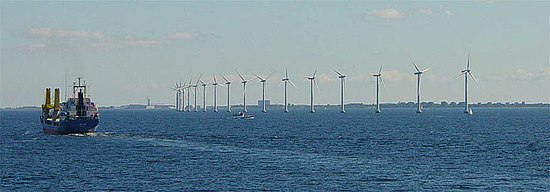
For the First Time, Offshore Wind Power Will Be Profitable Without Subsidies - IEEE Spectrum

Europe’s offshore wind power industry recently achieved a major milestone: three projects to be built without government subsidy. Bent Christensen, who is responsible for energy-cost projections for Siemens’s wind power division, credits industry-wide cost cutting that has outstripped expectations. “We’re three to four years ahead of schedule,” says Christensen.
...
In 2013, when new projects were delivering electricity for about €160 (US $179) per megawatt-hour, the industry collectively set what Christensen calls a “realistic stretch goal” to squeeze that to €100/MWh by 2020. Christensen ... says that by his math the industry is already there.
...
Christensen’s estimate is echoed by the financial advisory firm Lazard, which projects the unsubsidized cost of newly commenced projects at €105/MWh ($118/MWh)—a 27 percent reduction since 2014. Lazard’s December 2016 analysis finds that offshore wind is cheaper or on par with coal-fired generators, rooftop solar arrays, and nuclear reactors.

Recent bids for near-shore projects, meanwhile, rival the cost of onshore wind and utility-scale solar energy. Several projects in Denmark and the Netherlands promise offshore wind power for less than €75/MWh, and then there are the subsidy-free German bids this April by Copenhagen-based Dong Energy and the German utility Energie Baden-Württemberg. Ulrik Stridbaek, Dong’s senior director for regulatory affairs, estimates its projects’ power cost at €62/MWh.
...
Dong’s 1.2-gigawatt Hornsea Project One wind park, which it will begin installing next year at a spot 120 kilometers off the United Kingdom’s Yorkshire coast, is nearly twice the output of the current record holder.... Offshore turbines topped out at 3.9 MW each in 2013, whereas today’s biggest deliver 8 MW....

Zero-subsidy projections for those German projects, meanwhile, rely on 13- to 15-MW turbines that don’t yet exist. Dong is betting, says Stridbaek, that suppliers such as Siemens Gamesa and MHI Vestas Offshore Wind will have such giants ready for the North Sea projects’ completion, in either 2024 or 2025.

... Several novel approaches are now being tested in the Baltic Sea, where a 30-km patch cord between German and Danish wind farms will create an extra interconnector between the Nordic and European grids....

When the Baltic wind farms are idle—about 50 percent of the time—Europe’s software-integrated power markets will use their cables to exchange electricity between northern Europe and Scandinavia....

What made the project feasible, says Jørgensen, is a low-cost arrangement of the high-voltage direct-current (HVDC) converters needed to exchange 400 MW between the two grids, which are not in sync with each other. Early designs would have placed one converter offshore at Kriegers Flak. Instead, the project will place both converters back-to-back in Germany onshore, thus avoiding the roughly 50 percent premium for an offshore platform.

A supersize version of this dual-use cable design hatched last year by the Dutch-owned grid operator TenneT calls for offshore transmission hubs for the North Sea. The proposal, recently joined by Energinet, calls for one or more artificial islands whose power systems would gather up to 100,000 MW of offshore wind generation and parcel it out to the North Sea countries.

These “power link islands” would—like the Kriegers Flak link—minimize transmission costs by keeping HVDC converters on dry land and maximize their value by trading power between grids. They would also host technicians, spare parts, service vessels, and an airport offshore, thus reducing the cost of wind farm maintenance.
...
FOR FULL STORY GO TO:
By PETER FAIRLEY
26 Jun 2017

San Francisco International Airport uses insights from Autocase to convert "Triple Bottom Line" from Aspiration to Reality on $2.4B Renovation

San Francisco International Airport (SFO) is undergoing a $2.4 billion renovation of Terminal 1 in order to add capacity at one of the busiest U.S. airports and one of the fastest growing in the world. The designs for that renovation are being informed by Autocase®, a brand new software tool that automates "Triple Bottom Line Cost Benefit Analysis (TBL- CBA)" for buildings and sites.

"We have set ambitious goals to excel in passenger experience and health and to meet California's net zero energy requirements," said San Francisco International Airport's Chief Development Officer, Geoff Neumayr. "To do so, we needed to simulate and compare the impacts of possible investments in different building elements, from green roofs to dynamic window glazing to motorized windows to geothermal heat pumps. But I wanted to see those impacts in dollars and cents, and to feel assured we knew how they would affect our 53 million annual passengers and 30,000 employees."
So SFO required that their Design-Build teams, some of the best in the world like Austin Webcor Joint Venture + HKS/WB/ED2/KYA, evaluate each design element through a "comprehensive business case analysis" inclusive of "costs and benefits for all three bottom lines – financial, social, and environmental." "To begin with, together with the Autocase team, we assessed 6 possible design features for Boarding Area B," said Raphael Sperry of Arup, one of the key consultants on the project. "The green roof had a particularly compelling Triple Bottom Line Cost Benefit Analysis (TBL- CBA) - of $5 million over a 50-year timespan, supporting its inclusion in the project. In contrast, the ROI for the ground source heat pump was negative financially (TBL-CBA of -$5.23 million), and the analysis showed that level of investment was not outweighed by its environmental and social benefits. While ground source is an attractive technology, it's not appropriate for every project, and this allowed us to put our resources where they will have a bigger overall impact."

Green Roof
Electrochromic 
Glazing
Motorized
Window
Shades
Interior
Landscaping
Radiant
Heating &
Cooling
Ground Source
Heat Pump
Lifecycle Financial NPV
-$1.05
-$3.29
-$7.59
-$8.48
-$2.84
-$5.82
Social & Environmental NPV
$6.34
$6.26
$6.26
$11.39
$0.44
$0.59
Triple Bottom Line NPV
$5.29
$2.97
-$1.34
$2.91
-$2.41
-$5.23
All figures in millions of US$
Press Release dated June 19, 2017

The Swiss company hoping to capture 1% of global CO2 emissions by 2025 | Carbon Brief

On the roof of a waste incinerator outside Zurich, the Swiss firm Climeworks has built the world’s first commercial plant to suck CO2 directly from the air.

Climeworks says that its direct air capture (DAC) process – a form of negative emissions often considered too expensive to be taken seriously – costs $600 per tonne of CO2 today. This is partly covered by selling the CO2 to a nearby fruit and vegetable grower for use in its greenhouse.

Climeworks hopes to get this down to $100/tCO2 by 2025 or 2030. It aims to be capturing 1% of global CO2 emissions each year by 2025.
...
Negative emissions might be necessary to meet the goals of Paris, where an overspend against the carbon budget is paid back by pulling CO2 from the air.

Some estimates suggest as much as five billion tonnes of CO2 (GtCO2) would have to be removed from the atmosphere, and then locked away underground, each year by 2050. (Last year, Carbon Brief produced a series of articles on the need for negative emissions, the options available and whether they are feasible – or merely a distraction that encourages complacency).

Direct air capture (DAC) is one of those options, with DAC machines often described as “sucking CO2 from the air” or “artificial trees”. It has a number of attractive features, including a limited land footprint, the ability to site units near to CO2 storage sites and a clarity around how much CO2 it sequesters, in contrast to negative emissions that use biomass.
....
Academic estimates for the cost of CO2 capture, transport and storage, along with regeneration of chemicals used in the process, range from $400 to $1,000 per tonne of CO2.
...
According to a 2016 Nature paper, DAC would require a theoretical minimum of 0.5 gigajoules (GJ) of energy to remove and store each tonne of CO2. Or, perhaps, as much as 12GJ/tCO2 once inefficiencies and other stages of the process are taken into account.

On this basis, the paper says that capturing 12 billion tonnes of CO2 equivalent (GtCO2e) per year (around a third of annual global emissions) would require 156 exajoules (EJ) of energy. This is more than a quarter of total annual global energy demand for all uses, of around 550EJ.

The paper says the costs and energy requirements would be “prohibitive” and that research and development is required to bring them down.
10 Climeworks Plant Greenhouse Background Copyright Climeworks Photo by Julia Dunlop.jpg
...
In the past two years, Climeworks has grown rapidly, reaching 45 employees today. Its $20m in financing includes $5m in Swiss government grants and $15m from private equity.
...
The market price in Switzerland, for small amounts of CO2, is $200-250/t...

Driving the Climeworks process uses 2.5 megawatt hours (MWh) of heat, at around 100C, for each tonne of CO2, along with 0.5MWh of power. This energy requirement is roughly equivalent to the 12GJ/tCO2 estimates set out above, though the firm hopes to shave 40% off this figure, bringing it down to around 7GJ/tCO2. Gebald says an increase in energy resources – he points to wind and solar – would be needed to scale up direct capture.


...
FOR FULL STORY GO TO:
by SIMON EVANS
Carbon Brief www.CarbonBrief.org